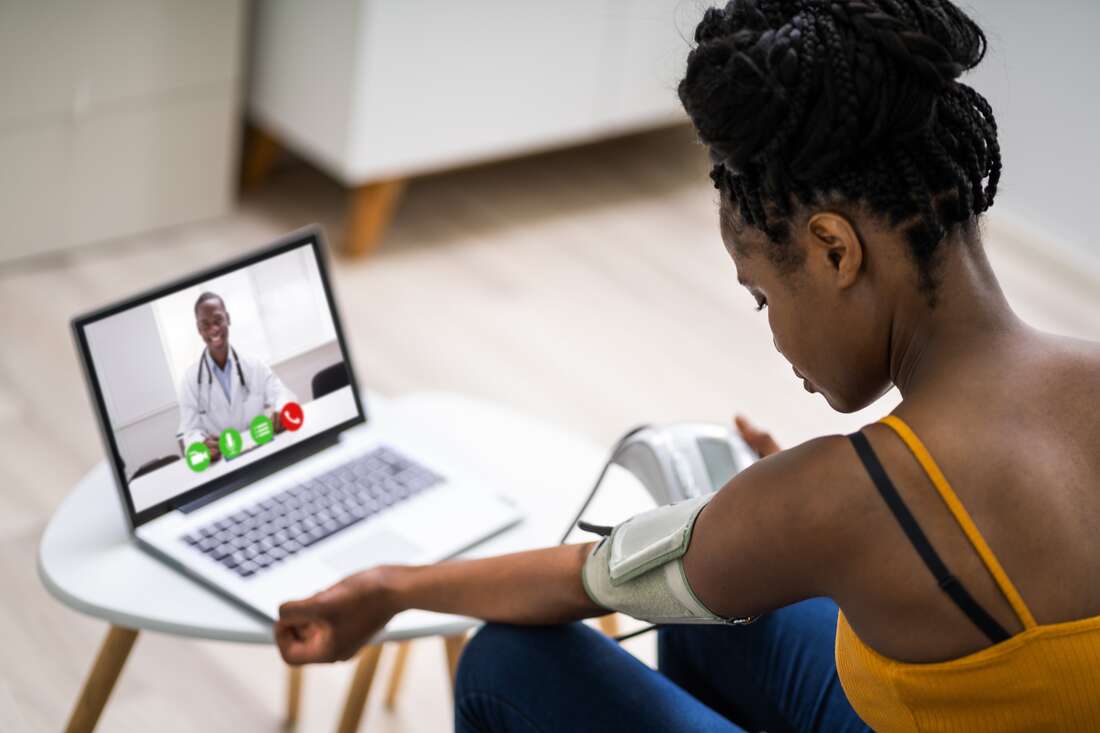
Murang’a County took a bold digital gamble in 2024 by introducing healthcare delivery through telemedicine, an approach to remote medical consultations.
This programme now links patients in far-flung areas to specialists in a hub and beyond, reducing travel costs and saving lives.
With over 1.1 million residents spread across seven sub-counties, Murang’a’s telemedicine effort exemplifies automation potential for equitable access to healthcare. The idea was part of the ongoing efforts to achieve Universal Health Coverage (UHC) and decongest main medical facilities that have been overburdened.
Murang’a has about 170 medical facilities that include eight main hospitals of Kirwara, Kandara, Kigumo, Maragwa, Murang’a Level 5, Kenneth Matiba, Kangema and Muriranjas. The World Health Organisation recommends at least three to five hospital beds per 1,000 people. This means Murang’a needs 3,000 to 5,000 hospital beds. Its total hospital capacity is 1,500.
Its demographics are skewed towards the elderly, which means a higher disease burden of non-communicable diseases such as diabetes and high blood pressure.
Recognising the challenges of geography and limited infrastructure in rural areas, the county identified telemedicine as a tool to bring specialist care closer to the people. The idea drew inspiration from national UHC goals and successful digital health pilots elsewhere in Kenya, but was tailored to Murang’a’s needs with funding from the county’s budget. A multi-stakeholder team that included private players was constituted. They envisioned a hub-and-spoke model: Muriranjas as the central hub, connected via secure video platforms to peripheral facilities, including dispensaries in rural areas.
For a variety of reasons, prior to telemedicine, Muriranjas was on a decline, notwithstanding its serene environment and excellent physical infrastructure.
The key enabler of telemedicine was a prior county move to digitise all its medical facilities by installing internet, digital records software and hardware.
Priorities focused on chronic diseases such as diabetes and hypertension, and non-infectious disease management — the key burdens highlighted in the 2022 Kenya Demographic and Health Survey.
Implementation kicked off with a six-month pilot in August 2024, targeting select facilities in all sub-counties. Community Health Workers (CHWs) were nudged to report to facilities and undertake initial screenings. Patients visited local dispensaries for vitals such as blood pressure and glucose checks, followed by virtual consultations with specialists. By early 2025, the programme was scaled county-wide, integrating with the county health records for electronic records. A dedicated call centre was established, and it enables appointment bookings.
To date, about 30,000 patients are served through virtual consultations, with most of the beneficiaries (75 per cent) being rural women, according to county data from September 2025. One challenge the county has faced is instability of power and internet, and inadequate lab services.
Infrastructure enhancements included solarisation for select health facilities and boda boda partnerships for lab sample transport. Health workers, including nurses for triage, received training, empowering local delivery.
Patients save an average of Sh1,200 per visit. Chronic patients now get monthly hypertension reviews without 50-kilometre journey to Murang’a Level 5.
Specialists handle more cases daily, easing urban overcrowding. Community acceptance is high, bolstered by the nominal Sh100 fee, and integration with the Social Health Authority (SHA) ensures subsidised medications.
Despite progress, obstacles remain. Connectivity falters in hilly areas, with 12 per cent downtime during rains. Privacy risks persist, despite protocols inspired by global standards; similar African breaches underscore vulnerabilities. Early skepticism about technology has eased with training, but funding gaps threaten sustainability amid UHC transitions. Murang’a’s approach mirrors global successes, providing actionable insights. The US Veterans Health Administration (VA) telemedicine, serving nine million people since the 1990s, emphasises integrated electronic health records (EHRs).
Murang’a could deepen KHIS ties, akin to the VA’s patient portals, for seamless data sharing. The UK’s NHS App, enabling 75 per cent virtual GP visits since 2018, highlights user-friendly AI triage. Adopting Kikuyu chatbots could address Murang’a’s language barriers.
India’s Sanjeevani, with 1.2 million daily rural consultations since 2020, leverages low-bandwidth tech and CHWs as facilitators. Murang’a’s boda integration fits, but India’s telecom partnerships suggest bolstering 5G or satellite internet for reliability. Some sites have shifted to satellite internet. The county is now expanding digital health provision to tele radiology, a branch of telemedicine that involves the remote interpretation of medical images, such as X-rays, CT scans, MRI scans and ultrasounds. This allows healthcare providers to access expert radiology services remotely, improving diagnosis and treatment.
Teleradiology offers several benefits, including *increased access to expertise*. Expert interpretation reduces errors and rapid transmission and interpretation of images. It is cost-effective as it reduces the need for on-site radiologists. Teleradiology has been deployed in Murang’a Level 5 hospital. Expansion to other hospitals is ongoing.
The greatest challenge facing Murang’a telemedicine is SHA. But SHA does not reimburse Murang’a for services rendered via telemedicine. The county has made attempts to reach out to SHA to regularise this, to no avail. Aside from telemedicine, SHA owes the county about Sh200m in unpaid claims. Therefore, the county is carrying single-handedly the costs of telemedicine, including drugs, staffing and internet.