The Ahero Irrigation Scheme is set for a Sh5.1 billion upgrade that will include investment in solar energy and a Sh4.2 billion grant to rehabilitate the Kisumu-based food security project.
The National Irrigation Authority (NIA) says talks are at an advanced stage to unlock financing amounting to Sh700 million to migrate from electricity to solar power, even as Japan International Cooperation Agency (JICA) has pledged a Sh4.2 billion grant to rehabilitate the entire scheme, one of the oldest in the country.
"We have also managed to get JICA in place, and we have been able to have the initial discussions. We are firming up a grant of about Sh4.2 billion to rehabilitate the whole of Ahero," NIA Chief Executive Officer Charles Muasya said in an interview.
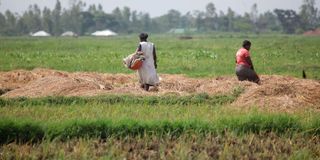
Located in the Kano Plains of Kisumu County, between the Nandi Escarpment and the Nyabondo Plateau, the Ahero Irrigation Scheme covers a gazetted area of 4,176 acres. However, the area currently under irrigation has expanded to more than double the original scheme's gazetted acreage.
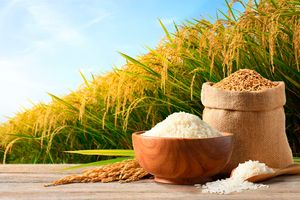
The main crop grown under the scheme is rice, with approximately 58,374 tonnes of the cereal produced annually.
Several varieties of rice are cultivated across the irrigated area, supporting the livelihoods of about 110,000 people within the scheme and its expanded catchment area.
The dominant rice variety is Sindano, which accounts for 74 per cent of the acreage under production. Other varieties grown at the scheme include Komboka, aromatic rice, and hybrid varieties.
Beyond rice, farmers also cultivate a range of food and commercial crops, including seed soybeans contracted by SeedCo Kenya of Kitale, commercial soybeans under contract with Josiche Co. Ltd of Nakuru, as well as watermelon, maize, tomatoes, sorghum and cowpeas.
Established in 1966, the Ahero Irrigation Scheme is one of Kenya's oldest public irrigation projects.
While it has expanded significantly over the years, it remains smaller than the country's largest rice-growing scheme, Mwea, which has about 35,000 acres under rice cultivation.
Other major irrigation schemes include Bura in Tana River County, with about 12,000 acres under irrigation, and the Turkana Irrigation Development Programme, which covers approximately 8,200 acres.
Kenya has identified irrigation as a viable path to reducing hunger in the country, with official reports showing that two out of every five Kenyans cannot afford sufficient and nutritious meals.
However, a World Bank report shows that irrigated land as a share of Kenya's cropland stagnated at about 1.6 per cent for many years, largely due to the substantial capital investment required to develop irrigation infrastructure.
Mr Muasya reckons that the authority has already mapped 200,000 additional acres of land that can be irrigated in a bid to increase production of critical crops such as maize and rice.
Galana-Kulalu, an ambitious food security project that is located in Tana River and Kilifi counties, will likely become the country's largest irrigation scheme once complete.
The project is being implemented through a Public-Private Partnership framework. It has reached financial close, with investor Selu Limited already growing maize on 10,000 acres.
The project aims to enhance food security by bringing 20,000 acres under production and generating an estimated 720,000 bags of maize and 160,000 bags of soybeans annually over a 30-year concession period.
Construction of the Galana Dam will support another 350,000 acres for food production in the long term, according to NIA.