Kirinyaga County has introduced a digital livestock registration system using muzzle identification to create a reliable database for tracking, planning, and the efficient delivery of veterinary services.
This digital registration is being undertaken alongside a mass vaccination drive against foot-and-mouth disease (FMD), targeting around 80,000 cattle across the county.
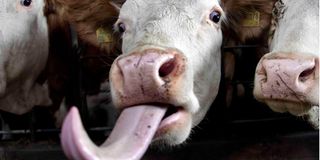
Each cow has a unique muzzle, much like human fingerprints, making the identification technology both accurate and tamper-proof.
Homa Bay County Verterinary Services Director Charles Oduor holds a cow as a data officer scans the animal for digital e-voucher system that registers each head of cattle through a muzzle-based identification process at Ramba Trading centre in Kabondo West in Homa Bay County on January 29, 2026.
Photo credit: George Odiwuor | Nation
Conducted by the Department of Agriculture, Livestock and Veterinary Services, the exercise has so far reached over 11,000 cattle as it enters its second week, with teams moving across villages to deliver the service to farmers.
Kirinyaga Governor Anne Waiguru said the project forms part of her administration's broader strategy to transform the dairy sector, with the aim of boosting household incomes by strengthening the dairy value chain.
She noted that the county has been implementing various interventions, including providing Artificial Insemination (AI) services to over 150 households, which has improved dairy breeds.
She added that, as the improved breeds now require better nutrition, the county is focusing on increasing the availability of animal feed to support higher productivity.
Waiguru observed that, over the years, milk production has risen from an average of 2.5 litres to 7.8 litres per cow per day, and the county is now targeting an increase to above 12 litres.
She added that her administration has also supported the capacity building of local dairy cooperatives by providing milk coolers, pasteurisers, yoghurt-making equipment, and backup generators, enabling them to add value to their milk.
Speaking at Kiaritha during the exercise, the County Executive Committee Member (CECM) for Agriculture, Livestock, Veterinary Services and Fisheries, Dr John Gachara, said that the county is working closely with the national government to eliminate the disease.
"We are currently undertaking our annual vaccination programme with the aim of making Kirinyaga a FMD-free zone," said Dr Gachara, noting that digital registration would enhance livestock management and improve responsiveness to farmers' needs.
"Once an animal is identified, we can track ownership, production and medical history. This enables a timely response and better advice for farmers, ultimately improving productivity,” he said.
He noted that the vaccination programme is heavily subsidised, with the government covering Sh150 per animal to ease the financial burden on farmers.
The Director of Livestock, Dr Catherine Mulonzi, said that the digitised approach would enhance the efficiency of service delivery and resource planning.
"We are combining vaccination with registration through muzzle identification, similar to fingerprints, to ensure accurate data collection," she said.
Conventional identification methods, such as visual identification, neck chains, ear tags, collar tags, leg tags and tattoos, have drawbacks such as data tampering, health problems and high costs.
She added that the system would help determine vaccine requirements, guide the deployment of personnel, strengthen disease surveillance and enhance the traceability of livestock.
"It will also help to prevent cattle theft and support better farm management, improving productivity and profitability," she added, urging farmers to disregard misinformation about taxation and take advantage of the programme.
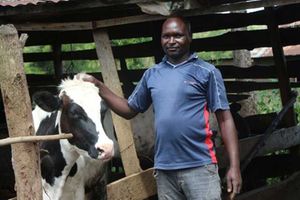
Livestock farmers have welcomed the initiative, citing reduced costs and the convenience of door-to-door services.