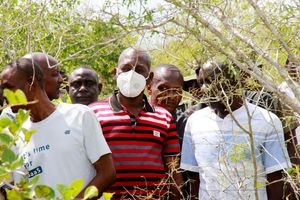
The High Court in Mombasa on Friday handed prison sentences ranging from 10 to 200 years to 29 convicts found guilty of murdering 190 children and one adult in Shakahola Forest, bringing to a close one of the most disturbing murder trials in Kenya’s history.
Cult leader Paul Nthenge Mackenzie, who orchestrated the deaths by luring followers of his Good News International (GNI) Church into the forest and directing them to fast to death, received the longest sentence of 200 years. His deputy, Smart Deri Mwakalama, was sentenced to 160 years.
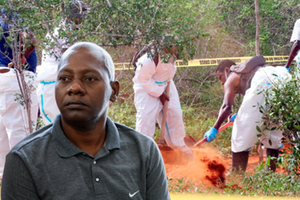
The sentences were determined by the individual roles played by each convict in the killings, which occurred between January 2021 and September 2023. The court distinguished between those who bore greater responsibility and those whose involvement, though less direct, contributed to the deaths. More than 429 bodies were exhumed from shallow graves in the forest.
Mackenzie received 100 years’ imprisonment for each of the 183 counts of murder by starvation, involving 182 children and one adult. The sentences were ordered to run concurrently. Otherwise, it would have meant 18,300 years in jail.
He was also sentenced to 100 years for each of the eight counts of murder by direct homicide involving children. These sentences were similarly ordered to run concurrently. Had that not been the case, it would have translated to 800 years behind bars.
“The sentences above shall run consecutively, making an aggregate sentence of 200 years’ imprisonment for convict Mackenzie,” Justice Diana Kavedza ruled.
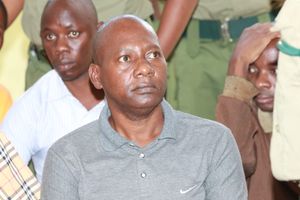
Cult leader Paul Mackenzie follows proceedings during the sentencing of his murder trial over Shakahola massacre.
Photo credit: Kevin Odit| Nation Media Group
Mwakalama, who served as Mackenzie’s deputy and played a central role in administering the Shakahola settlement, received 80 years for each of the 183 starvation-related murders and another 80 years for each of the eight direct homicide counts.
The court found that he played a central role in transporting victims to Shakahola Forest and supervising the implementation of the deadly fasting instructions.
With the sentences in each category running concurrently, but the two categories running consecutively, his aggregate prison term stands at 160 years.
Live: 200 years for cult leader Mackenzie over Shakahola massacre
A further 14 convicts received 160 years’ imprisonment each. They are Steven Sanga Muye, Evans Kolombe Syria, Titus Munyao, Emanuel Amani Kilumo, Joseph Bokole, Newton Kimathi, Kahindi Robert, Alex Odari, Gilbert Kea Katana, Stephen Ngungi, Alphonse Chomba Eliud, Samuel Kenga, Ann Anyoso and Peter Ramadhan.
Ten others were sentenced to 140 years each. They are Steven Ominde, Julius Katana, Charles Kalume Charo, Safari Kazungu, David Amanya, Mark Kiogora, Maurice Machacha, Mary Kadzo, Simon Musembi and Mwinzi Kavenge.
At the lower end of the sentencing scale, Enos Amanya Ngala and Pastor Lucas Owino Ogola each received 10 years, making them the least punished among the 29 convicts.
Ngala, who lost six of his seven children in the forest, had pleaded guilty and confessed to what had happened in Shakahola. He also expressed remorse and indicated his willingness to undergo rehabilitation, reintegrate into society and abandon extremism.
The wide variation in sentences reflected the court’s assessment of each convict’s individual responsibility rather than treating everyone involved in the killings as equally culpable.
In determining the punishment, the court considered the gravity of the offences, the vulnerability of the victims, the circumstances surrounding their deaths and the extent of each convict’s participation.
The judge’s sentencing remarks went beyond the prison terms, laying bare the cruelty inflicted on children in the forest and the central role she found Mackenzie played in orchestrating the killings.
Justice Kavedza described the deaths as the result of premeditated crimes committed over a prolonged period, saying the punishment had to reflect the gravity of the offences and serve as a warning against the use of religious extremism to justify murder.
“What punishment do such perpetrators deserve? No mercy can be granted where cruelty was so premeditated and carried on for so long. The sentence of this court must match the darkness of their deeds. The maximum penalty of the law, stripping of liberty, confinement for life, removed forever from the light of the human race. A permanent sentence for the horrific crimes committed against the most defenceless of the human race,” the judge said.
She questioned whether the convicts deserved leniency, pointing to what she described as their lack of remorse and continued belief that their children had gone to heaven despite the suffering and deaths.
“The perpetrators stand with unbent necks, devoid of guilt, unbothered by remorse, declaring in their blind and arrogant zeal that their children are in heaven and they are ready to follow. Do such as these deserve an iota of mercy? Does justice bend to offer mercy here, where mercy was systematically erased? No,” she said.
Justice Kavedza observed that no prison sentence could reverse the damage suffered by the victims or restore the families torn apart by the killings.
“They now plead for a transient sentence, can such repair the permanent damage? The sentence of this court is absolute, to isolate the darkness from the day, to seal these hands away from human touch, to ensure that while the sun continues to rise the world is safe from what they chose to be. The sentence is now recorded, enduring and complete, a monument to those who were denied their tomorrow,” she said.
Lady Justice Diana Kavedza Mochache reads the sentence for cult leader Paul Mackenzie and 28 other co-accused who were convicted over 191 deaths in Shakahola Forest, Kilifi County.
Photo credit: Kevin Odit| Nation Media Group
The judge placed Mackenzie at the centre of the killings, describing him as the principal architect of the massacre in his capacity as leader of Good News International Ministries and the Shakahola settlement.
She found that he orchestrated the movement of followers into the forest, presided over meetings where instructions to fast to death were issued and specifically directed that children should die first.
The court also found that Mackenzie presided over burials, which he referred to as weddings, and communicated instructions to village elders through his deputy, Mwakalama.
He further directed the use of violence against children who resisted fasting, attempted to abandon the practice or tried to escape from the forest.
“The law imposes punishment not out of malice but out of grave necessity: to deter. A stark warning to all humanity that no fanatic or cruel authority may claim a right to kill and those who try shall feel the heavy hammer of the judicial pen,” Justice Kavedza declared.
To demonstrate the scale of the tragedy, the judge classified the 191 victims according to their ages and established causes of death, highlighting the vulnerability of those who perished.
Of the victims, 161 were infants, toddlers and children below the age of nine and a half. Another 22 were aged between 10 and 13, while five were between 14 and 16 and a half years. The ages of two children could not be established. The remaining victim was an adult.
The court established that 183 victims, comprising 182 children and one adult, died from starvation, while eight children were killed through direct homicide, including suffocation, strangulation and blunt force trauma.
In one of the most disturbing passages of her sentencing remarks, Justice Kavedza recounted the death of the youngest victim, a baby who survived for only 12 days after birth.
“Consider the infant, a tiny life, just twelve brief days upon the earth, denied the mother’s milk from the moment of its birth, with a raw and healed umbilical cord still clinging to its frame, left to shrivel in the heat under the enforcers’ watch. Twelve days of weak, failing cries until the quiet final breath. A newborn child delivered in the scorched dry land, straight from labour into agonising death,” she said.
The judge also described the suffering of the 161 infants and young children who gradually weakened from hunger and thirst, crying for food and water but receiving no help from those responsible for their care.
Instead, some were subjected to violence, with the court citing an instruction attributed to Mackenzie, “mbinguni mtaenda kwa mangumi na mateke”, meaning they would enter heaven through punches and kicks.
For the older children, the judge said, the suffering was compounded by their awareness of what was happening to them and their inability to escape.
The 22 children aged between 10 and 13 were old enough to understand the betrayal by their parents but remained too vulnerable to save themselves from deliberate starvation.
The five adolescents aged between 14 and 16 and a half who resisted the instructions to starve were subjected to even more brutal treatment. Some had their hands tied, were locked up, bludgeoned or strangled after attempting to survive.
Pastor Paul Mackenzie follows proceedings when High Court Judge Justice Wendy Kagendo visited his homestead within Shakahola Forest in Malindi Sub-county June 24, 2026.
Photo credit: Kevin Odit | Nation Media Group
Justice Kavedza said their resistance was met with violence instead of the protection they deserved from the adults entrusted with their care.
“They refused to starve. They clung to life and light as expected of their age. They were met with brutal treatment. Their hands were tied and they were locked up, bludgeoned and strangled day and night. Their courage was answered with violence, their throats crushed in the dust, silenced for resisting a monstrous cult,” the judge said.
In explaining the principles behind the sentences, Justice Kavedza identified deterrence, retribution and the protection of society as key objectives of punishment.
She said retribution was necessary to restore the moral balance by ensuring that punishment reflected the gravity of the crimes, while incapacitation would prevent those who preyed on vulnerable people from harming others.
The sentences, she said, were intended not only to punish those responsible for the deaths but also to send a strong warning that religious beliefs could not be used to justify taking innocent lives.