A section of the Rironi-Mau Summit highway that was expected to be completed and opened to motorists by October 31, is still under construction, despite earlier assurances that it would be ready.
On September 10, Transport Cabinet Secretary Davis Chirchir announced in an interview that the Rironi-Naivasha section of the highway would be completed within one and a half months.
He expressed confidence that construction was progressing well and would be completed within the set timeframe, paving the way for motorists to use the improved road.
However, a spot check by the Nation on Friday established that construction was still ongoing, with contractors and workers on site.
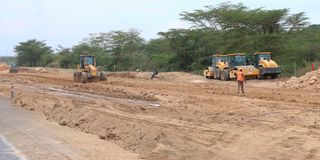
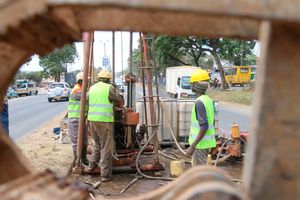
Workers were building pillars intended to support an interchange in Naivasha, while sections of the road remained untarmacked. Motorists were using the highway amid the works, with traffic building up in some areas where construction was incomplete.
During the September interview, Mr Chirchir said the government would shift focus to the remaining sections of the corridor, including the Rironi-Mai Mahiu-Naivasha road, once the Rironi-Naivasha section was completed.
Ministry of Roads and Transport Cabinet Secretary Davis Chirchir during a press briefing at Transcom House in Nairobi on June 18, 2026.
Photo credit: Francis Nderitu | Nation Media Group
The plan was to first open the upper side of the A8 corridor to traffic before proceeding with works on the A8 South section, as construction on the stretch towards Mau Summit continued. He said the entire corridor was expected to be completed by June 2027.
However, on Thursday, Mr Chirchir gave a revised timeline, saying the Rironi-Naivasha section would be opened to motorists in December.
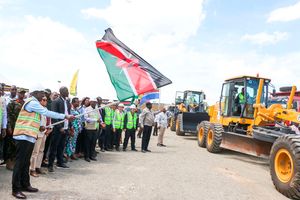
Addressing the press after inspecting the construction works in Naivasha, he said the contractor was nearing completion of earthworks and would soon begin tarmacking.
Once the section is complete, the Chinese contractor will begin construction of the Mai Mahiu-Naivasha and Naivasha-Gilgil sections.
The CS also warned that rehabilitation of major roads across the country could stall in the coming days due to an acute shortage of bitumen, a key material used in road construction.
JKIA: CS Chirchir says no deal with Zim businessman
He attributed the shortage to conflicts in the Middle East and the closure of the Strait of Hormuz, a major route for bitumen supplies.
Mr Chirchir said the shortage could force the government to review its road tender prices to reflect rising bitumen costs, which he said had increased from Sh90 per kilogramme to Sh220 per kilogramme in the past six months.
Ongoing dualing of the Rironi-Mau Summit highway at Elementaita in Gilgil on October 2, 2026. The contractor, China Road and Bridge Corporation (CRBC) says earth work stands at 82 percent.
Photo credit: Boniface Mwangi | Nation
“We are engaging to consolidate purchase of bitumen from contracted sources. The ministry has turned to crowd sourcing resources due to limited budgetary allocations from government. The ministry has managed over Sh200 billion through securitization which has funded roads construction projects across the country," he said on Thursday.
National Assembly Transport and Infrastructure Committee Chairman George Kariuki lauded the progress, saying the highway would open up businesses and ease traffic, particularly during the festive season.
"We are happy with the progress that we have witnessed today, we want to urge the minister to ensure that this road in good shape as we approach the festivities. We do not want to see situations we witnessed last year December. The CS has assured us he would keep the timeline that he gave to the public," he said.
Motorists and traders along the highway said its completion would improve transport and road safety but urged the government to expedite the remaining works.
Kenneth Munene, a tout operating along the highway, said they were eager for the project to be completed so that normal operations could resume, noting that several stages had been removed to pave the way for construction.
He said they had been informed that October 30 was the completion deadline but were disappointed to find construction still ongoing.
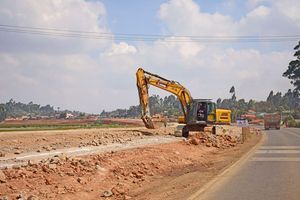
Ongoing construction of the Rironi–Mau Summit highway pictured at Rironi on September 13, 2026. Transport Cabinet Secretary David Chirchir said the expanded Rironi–Naivasha section will be fully dualled by October 30, 2026, allowing motorists to use the upgraded road.
Photo credit: Billy Ogada | Nation
"We are happy about the project and cannot wait for it to be completed and opened so that we can continue with our work. We heard that today was the deadline, but construction is still ongoing. We are still waiting when it be opened. It will solve traffic nightmare," he said.
Stephen Ngare, a hawker operating along the highway, said the expanded road would help reduce accidents along the busy route. He urged the government to speed up the works and complete the project as promised.
Meanwhile, trader Mary Wambui said the construction had disrupted businesses, with several structures previously occupied by traders demolished to pave the way for the expansion.
She said traders hoped the government would allocate them designated spaces to resume business once the project was completed.
"Our businesses are low. We depended on the stages that were along the highway, but now they no longer exist. We understand the importance of the highway under construction. We only plead that they complete it within the stipulated time," she said.
The project is being undertaken under the Public-Private Partnership (PPP) framework by the China Road and Bridge Corporation (CRBC)-National Social Security Fund consortium, following a privately initiated proposal.
It is being implemented under a Design-Build-Finance-Operate-Maintain-Transfer model and was officially launched by President William Ruto on November 28, 2025.
The first section covers about 138 kilometres, comprising the 81-kilometre Rironi-Gilgil road and the approximately 57-kilometre Rironi-Mai Mahiu-Naivasha section, traversing Kiambu, Nyandarua and Nakuru counties.
The second section covers about 94 kilometres between Gilgil, Nakuru and Mau Summit and is being implemented by Shandong Road and Bridge International.
Together, the two sections form part of the wider Rironi-Nakuru-Mau Summit Corridor, a major artery for the movement of people and goods between Nairobi and western Kenya.