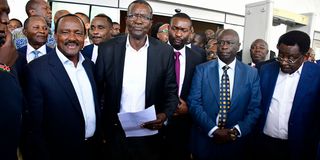
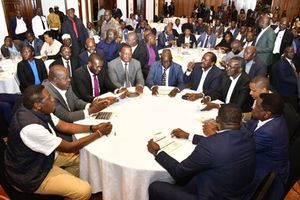
Opposition leaders have issued demands for changes in the elections process to the Independent Electoral and Boundaries Commission (IEBC) after they dramatically walked out of a meeting called by the commission to discuss electoral preparedness.
The leaders had earlier held a consultative meeting at a hotel in Karen, Nairobi before proceeding to the meeting with the commission and other political parties, including officials of the broad-based partnership between UDA and ODM.
The opposition leaders accused the IEBC of failing to consult stakeholders on preparations for the 2027 General Election, saying the commission had ignored proposals for technical teams to address concerns raised over the credibility of the polls.
The opposition wants five major electoral reforms, including an audit of the voters’ register and changes to elections technology and the decentralisation of presidential results transmission, implemented before the August 2027 elections.
The leaders warned that unresolved questions surrounding the electoral process could undermine confidence in the outcome and trigger disputes after voting.
Opposition leaders walk out of IEBC meeting
Democracy for Citizens Party (DCP) Leader Rigathi Gachagua said the opposition was unwilling to engage the commission without a structured process to address its concerns, including the formation of technical teams to examine electoral systems, technology and administrative preparedness.
“We have looked at the agenda and there is no people’s agenda on the list. This is the agenda of the commission. We cannot participate in this,” Mr Gachagua said, accusing the IEBC of failing to respond to letters seeking technical engagement.
He said the opposition had formed a team led by former Chief Justice and United Green Movement leader David Maraga to handle electoral reform issues and was ready to meet the commission, provided the discussions were conducted through technical teams.
Among the opposition’s demands is the abolition of a national presidential tallying centre, with the parties insisting that results should be received, processed and made accessible through a decentralised system at constituency level.
The opposition argues that the presidential results should be announced based on figures declared at polling stations and constituencies, with the IEBC chairperson limited to declaring the cumulative results rather than undertaking another verification or tallying process at a central facility.
The leaders want the results transmission system redesigned to allow each of the 290 constituencies and the diaspora vote to have independent servers, with media, political parties and candidates granted read-only access to the results as they are transmitted.
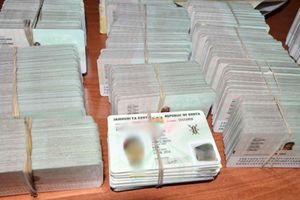
The leaders also demand an independent audit of the voters’ register and biometric records, followed by public inspection to identify and weed out dead voters, duplicate entries and other irregularities that could compromise the integrity of the roll.
Independent Electoral and Boundaries Commission (IEBC) Chairperson Erastus Edung Ethekon makes his remarks during the high-level consultative meeting with leaders of political parties organised by the IEBC held on November 19, 2026.
Photo credit: Francis Nderitu | Nation
“Kenyans must have a clean, accurate and verifiable register. The IEBC must remove duplicate, deceased and ineligible voters, and register every eligible Kenyan. These are issues that are non-negotiable,” Mr Maraga said.
The team says the existing voter verification portal does not amount to the public inspection required under the Elections Act, insisting that the full register should be published in its prescribed format to allow scrutiny by voters, political parties and election observers.
It wants the audit completed before the register is cleaned and published, with voters given sufficient time to verify their details and biometric records ahead of the election.
The opposition also demands amendments to the Elections Offences Act to introduce tougher penalties for electoral malpractice, including a proposed minimum five-year prison sentence without the option of a fine for specified serious offences committed by election officials.
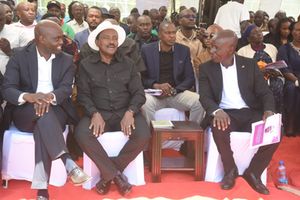
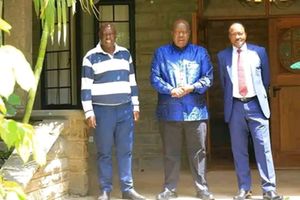
Wiper Patriotic Front and the Ukombozi Alliance leader, Kalonzo Musyoka (centre), Elgeyo Marakwet County Governor Wisley Rotich (left), Kalonzo's bodyguard Luca Keitany, during a burial of his late wife, Joyce Keitany, in Cherang'any/Chebororwa, Marakwet West Constituency on November 18, 2026.
Photo credit: Jared Nyataya | Nation
The opposition wants officials found guilty of altering or withholding results, compromising election technology or unlawfully barring agents from the electoral process to face stiffer penalties, subject to conviction after due process.
It has also called for the prosecution of State officers who misuse public resources for partisan campaigns.
On election technology procurement, testing and auditing, the opposition wants the IEBC to disclose its technology policies, procurement specifications, system architecture and testing procedures before the elections are held. It wants the procurement of election technology to be decentralised and modular rather than bundled under a single vendor, arguing that a single supplier could create vulnerabilities and undermine transparency.
It calls for independent end-to-end testing of the Kenya Integrated Election Management System (Kiems) kits, public simulations, security testing and the involvement of political parties and candidates in the certification process.
The parties also demand that election technology be designed to prevent unilateral alteration of results, with all changes traceable and independently verifiable.
They also raise concerns over the integrity of IEBC personnel and administrative processes, calling for open recruitment and vetting of returning officers and county election managers.
The recruitment process, the opposition chiefs say, should be competitive, transparent and subject to multi-party oversight, with the commission publishing shortlists, diversity data and the qualifications of those selected.
Further, the opposition demands an independent audit of ballot materials and their printing, saying the number of extra ballot papers should be capped and all printed materials serialised to prevent misuse.
Wiper Party leader Kalonzo Musyoka said the opposition had attended the meeting in good faith but accused the IEBC of failing to demonstrate independence, impartiality and preparedness ahead of the 2027 General Election.
Mr Musyoka said the opposition had walked out to avoid legitimising what he termed the formalisation of a bungled election, warning that they would not endorse an electoral process they believed lacked transparency and credibility.
90d2b116-27b1-489d-824a-b361edb469d8
“We came to the IEBC today in good faith, and we expected the same in return. Good faith is shown in deeds: an independent, impartial and prepared commission. Today, we did not find it,” he said.
He insisted that Kenyans deserve an election in which votes are counted at polling stations, openly verified and declared as cast. He also warned against manipulation of the voter register through the inclusion of names of people who were not registered voters.
IEBC Chairperson Erastus Ethekon regretted the opposition’s decision to walk out, saying the meeting had been convened to explain the commission’s preparedness and provide an opportunity for engagement with political parties.
He said the commission had already floated a tender for election technology kits and other systems in July, but the procurement process had been caught up in court proceedings.
Mr Ethekon also said the recruitment of a chief executive to head the commission’s secretariat had been delayed by a court case, warning that delays in securing election technology and filling key positions could affect preparations for the elections.
“We need those kits, we need ballot papers for election, but there you are. We need to be fair. Then you come and blame IEBC that we are not prepared for the election. Is that fair? We need to understand that elections is a whole exercise involving all the other State institutions,” he said.
He accused some actors of frustrating the commission through litigation, saying the challenges affect its ability to proceed with critical preparations for the election.
The opposition, however, insisted that electoral reforms must be addressed before the polls, saying that Kenyans should not be asked to contest the credibility of an election after the results have been announced.
Despite the walkout, the IEBC officials proceeded with the meeting with a section of political parties, including ODM and UDA.
UDA Chairperson Cecily Mbarire opposed the opposition’s demand for a separate engagement with the IEBC, insisting that all political parties should be treated equally and given an opportunity to raise their concerns through a common forum.
“There should be no special treatment. The elections that we are carrying out are not for the opposition or for the government; it is for the citizens. We need to be treated equally as political parties. There is no political party that is [more] special than the other. Let them raise their issues here where all of us are attending,” she said.
Orange Democratic Movement (ODM) Deputy Party leader and Kisii County Governor Simba Arati makes his remarks during the high level consultative meeting with leaders of political parties organized by the IEBC held on November19, 2026.
Photo credit: Francis Nderitu | Nation
ODM Deputy Party Leader Simba Arati said the party was willing to participate in peaceful consultations and provide experts to engage the IEBC on electoral preparedness, terming the opposition’s walkout as unfortunate.
“We are not aware of any technical teams, but if there are, we are willing to come out and give them our team of experts as the broad-based team. It is unfortunate that they walked out, we wanted to listen to them. We are ready for the election as a party,” Mr Arati said.