With just 13 months to the August 10, 2027 General Election, Kenya's political heavyweights have shifted into campaign mode, rallying supporters in their strongholds to register as voters in what is shaping up to be one of the fiercest electoral battles in the country's history.
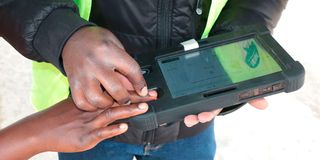
At the centre of the race is a nationwide voter registration drive by the Independent Electoral and Boundaries Commission (IEBC), which aims to register 6.3 million new voters ahead of the polls.
The drive has become a key political battleground with leaders across the divide viewing voter registration as the first contest in the race to State House and other elective offices.
Independent Electoral and Boundaries Commission (IEBC) Chairperson Erastus Edung Ethekon during the launch of the IEBC Strategic Plan 2024–2029 and Election Operations Plan 2025–2027 at the Kenyatta International Convention Centre in Nairobi on June 24, 2026.
Photo credit: Wilfred Nyangaresi | Nation Media Group
IEBC chairman Erastus Ethekon recently said the commission aims to increase the number of registered voters from the current 24 million to 28.9 million before the 2027 election.
“Our target is to enroll a total of 28.9 million voters who will participate in the 2027 General Election. We are working with various government agencies and other stakeholders to attain the target,” Mr Ethekon said.
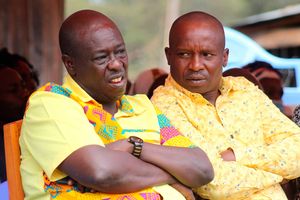
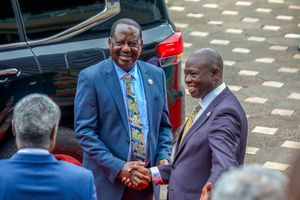
President William Ruto and former Deputy President Rigathi Gachagua have emerged as the most vocal champions of the registration exercise, each urging supporters in their political backyards to enlist in large numbers.
Dr Ruto is seeking a second and final term in office amid an opposition that is yet to agree on a single presidential candidate.
Those positioning themselves to challenge him include former Vice-President Kalonzo Musyoka, former Chief Justice David Maraga, Busia Senator Okiya Omtatah, former Cabinet Secretaries Eugene Wamalwa, Martha Karua and Justin Muturi, businessman Jimi Wanjigi, and Mr Gachagua.
Nairobi Senator Edwin Sifuna has not declared his intentions but is widely viewed as a potential contender should he enter the race.
The ouster of Mr Rigathi Gachagua as Deputy President is set to trigger a supremacy battle in Mount Kenya as leaders jostle to position themselves in the region ahead of the 2027 elections
Photo credit: John Nyagah | Nation Media Group
On Monday, Mr Gachagua urged residents of the Mount Kenya region to mobilise every eligible voter, including the youth, the elderly and the sick, to register ahead of what he described as an "epic political battle" against President Ruto.
“We need to ensure we have 10 million votes in Mount Kenya, Nairobi, the Maasai and the Kipsigis regions so that we are able to decisively beat President Ruto in the 2027 General Election,” he said at his Wamunyoro home in Nyeri County.
He argued that the opposition's best chance of defeating President Ruto lies in maximising voter registration and ensuring a high turnout on polling day.
Referring to the recent Ol Kalou parliamentary by-election, Mr Gachagua claimed the outcome had demonstrated that President Ruto could be defeated.
“With the outcome of the Ol Kalou by-election, it is crystal clear that it is possible to beat President Ruto and send his allies in Mount Kenya into political oblivion,” he said.
He also urged leaders allied to the ruling United Democratic Alliance (UDA) in the region to defect to his Democracy for Citizens Party (DCP), while warning that some whom he considers political "betrayers" would not be welcomed.
President Ruto has also repeatedly appealed to residents of his South Rift political base to register as voters, warning that low registration could weaken his support in 2027.
Ministry of Roads and Transport Cabinet Secretary Davis Chirchir during a press briefing at Transcom House in Nairobi on June 18, 2026.
Photo credit: Francis Nderitu | Nation Media Group
Speaking during the burial of Mzee Edwin Koech, father of Roads Cabinet Secretary Davis Chirchir, in Sotik, Bomet County, on April 30, the President expressed concern over the low uptake.
“There are 1.8 million eligible voters who have not registered with the IEBC and another 500,000 young people in Rift Valley who are yet to obtain national identity cards after turning 18.
“It is unfortunate that I have to go out there begging other communities for support while there are huge numbers at home who have not registered as voters. This is a serious matter that we need to address,” he said.
Political observers say the aggressive voter mobilisation reflects the high stakes of the 2027 election.
United Green Movement party leader and presidential hopeful David Magara said the voter registration exercise should go hand in hand with broader electoral reforms.
“The issues relating to the integrity of the electoral process, accountability, diaspora voting, legal reforms and deployment of technology must be openly discussed and addressed,” he said in Kericho.
Recent remarks by Head of Public Service Felix Koskei have also fuelled debate over the political significance of the voter registration drive.
Head of Public Service Felix Koske at a past event.
Photo credit: Jared Nyataya/ Nation Media Group
Speaking in Nandi County, Mr Koskei described the 2027 election as a fiercely contested battle.
“The 2027 General Election will not be a laughing matter. It will be a titanic battle to retain the presidency,one unlike any we have seen before,” he said.
He said he had held discussions with Nandi Governor Stephen Sang and other leaders on strategies to bolster support for President Ruto.
“We have discussed what needs to be done urgently to ensure the President retains the people's support.”
Meanwhile, Interior Cabinet Secretary Kipchumba Murkomen has announced that the government will deploy officers to secondary schools to register students aged 18 and above for national identity cards.
The exercise targets about one million students, most of them candidates sitting this year's Kenya Certificate of Secondary Education (KCSE) examination.
“There are around one million students who have attained the age of 18 and require national identity cards. Officers will begin registering them in schools next week,” Mr Murkomen said during a function in Bomet County.
He said the government had waived the Sh1,000 registration fee and promised that ID cards would be processed within seven days after biometric data is captured.
Data from the National Registration Bureau, the department charged with issuing ID cards, indicates that of the 915,101 applications for IDs that were made in 2014, over 175,000 were rejected.
The IDs will enable students to enrol in universities and colleges, apply for scholarships and Higher Education Loans Board funding, and register as voters.
“As citizens, once they receive their identity cards, they will be free to register as voters with the IEBC,” he said.
Should a significant proportion of the students register as voters, they would expand the electoral influence of Generation Z,a demographic that has become increasingly vocal and critical of President Ruto's administration.
Political insiders also say some candidates are quietly encouraging supporters to transfer their voter registration to strategic constituencies and counties in an effort to improve their electoral prospects ahead of the 2027 polls.