A broad coalition of business leaders, professional bodies and political actors is pressing for a scaled-back tax regime as Kenya confronts a Sh4.82 trillion budget financing gap, rising public debt and renewed fears of unrest tied to contentious revenue laws.
The push comes ahead of parliamentary debate on the Finance Bill 2026, with lawmakers expected to table the Budget and Finance Committee’s report in the National Assembly on Tuesday. The Bill, as published, seeks to raise an additional Sh120 billion in revenue to plug part of the fiscal deficit and support the 2026/27 national budget.
However, mounting public opposition—echoing the backlash that led to the collapse of the Finance Bill 2024—has intensified pressure on legislators to strike out several contentious proposals. Stakeholders warn that failure to soften the Bill could trigger economic disruption and social unrest similar to the deadly June 2024 protests, when demonstrators breached Parliament precincts shortly after passage of the earlier finance legislation.
At the centre of the debate is a delicate balancing act: how to raise sufficient revenue without further straining households already grappling with high living costs, or undermining business confidence at a time of global economic uncertainty. Treasury officials, meanwhile, maintain that there is limited room to cut spending, leaving lawmakers with two main options—approve the revenue measures or increase borrowing.
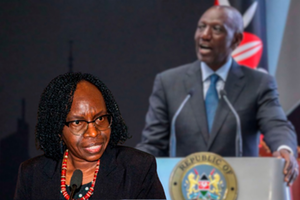
Speaking before the National Assembly’s Budget and Appropriations Committee, Treasury Cabinet Secretary John Mbadi dismissed proposals to significantly rationalise expenditure, warning that such cuts would affect public sector wages and core government operations.
“If you look at this budget, there is nothing to cut. Otherwise, I will be cutting salaries of government employees,” Mbadi told the committee chaired by Alego Usonga MP Samuel Atandi.
He added that the government had already factored in additional revenue from the Finance Bill 2026 and administrative reforms at the Kenya Revenue Authority to meet its targets.
Cabinet Secretary for the National Treasury and Economic Planning John Mbadi delivers the FY 2026/27 Budget Highlights at Parliament Buildings, Nairobi, on Thursday, June 11, 2026.
Photo credit: Dennis Onsongo| Nation Media Group
Kiharu MP Ndindi Nyoro had proposed a comprehensive review of expenditure, arguing that global economic shocks—including rising oil prices linked to geopolitical tensions in the Middle East—warranted fiscal restraint rather than higher taxation.
Mr Nyoro’s position reflects growing concern among some lawmakers that Kenya’s tax burden has reached a politically and economically sensitive threshold.
For the 2026/27 financial year, the National Treasury is targeting total revenue of Sh3.63 trillion, equivalent to about 17.4 per cent of gross domestic product (GDP). This is up from approximately Sh3.40 trillion, or 18.2 per cent of GDP, in the current fiscal year.
Of this, Sh2.99 trillion is expected from ordinary revenue, representing 14.3 per cent of GDP, while Sh644 billion is projected from Appropriation in Aid (A-i-A), marking a 4.8 per cent increase from the current year’s approved estimates.
The Treasury has also revised its expectations downward, citing an anticipated shortfall of Sh147.4 billion in the current financial year.
Against this backdrop, the Finance Bill 2026 has become a focal point of competing economic and political interests.
Professional bodies including accountants, lawyers, bankers and manufacturers have jointly called for a “compromise Finance Bill” that avoids steep increases in the cost of living or doing business.
Among the most prominent proposals is a call to reduce the marginal Pay-As-You-Earn (PAYE) tax rate to between 25 and 30 per cent, alongside a widening of income tax bands to ease pressure on salaried workers.
The Kenya Bankers Association has argued that Kenya’s PAYE structure is overly compressed, pushing workers into higher tax brackets too quickly compared to peer economies.
A senior official at the association said lower PAYE rates could stimulate economic activity by increasing disposable income, savings and investment.
“Kenya’s PAYE tax bands are narrow and steep, with high marginal rates applying at much lower incomes than in peer countries,” the association said in its submission to Parliament.
Other stakeholders argue that workers are already facing multiple deductions that have significantly reduced take-home pay. These include contributions to the Social Health Insurance Fund, the housing levy and enhanced pension contributions under the National Social Security Fund framework.
The cumulative effect, they say, has been a steady erosion of real wages.
Under current arrangements, employees contribute 2.75 per cent of gross pay to the health fund, 1.5 per cent to the housing levy—matched by employers—and increased pension deductions introduced in recent reforms.
A simulation presented by banking sector stakeholders suggests that a 5 per cent reduction in PAYE could inject more than Sh28 billion into the economy annually, boost GDP output by up to Sh42 billion and create tens of thousands of jobs through increased consumption and lending.
Tax experts from professional accounting bodies have backed the proposal, arguing that a more progressive PAYE structure would align with government commitments under its medium-term revenue strategy.
They argue that widening tax bands and lowering marginal rates would enhance fairness while improving compliance.
“With higher deductions such as NSSF, housing levy and health contributions over the last two years, a more progressive tax rate would help increase disposable income among individuals,” one expert noted in a submission to the Finance Committee.
The argument is that higher disposable income would translate into stronger consumer demand, improved savings and greater investment activity, ultimately broadening the tax base rather than shrinking it.
Kenya is also being compared with regional peers. In countries such as Ghana and South Africa, income tax systems feature broader bands and more graduated rates, allowing higher earners more flexibility before hitting top marginal rates.
In Ghana, for instance, tax bands range from zero to 35 per cent, with higher thresholds applying at significantly higher income levels than in Kenya.
Beyond income tax, the Finance Bill 2026 has triggered sharp disagreement over proposed changes to value-added tax (VAT) treatment of essential goods and services.
Stakeholders are opposing plans to shift several goods from zero-rated to VAT-exempt status, warning that the change would increase production costs and ultimately push up consumer prices.
Under Kenya’s tax system, zero-rating allows businesses to claim input tax credits, effectively reducing production costs. In contrast, exempt status prevents recovery of input VAT, making goods more expensive along the supply chain even if no VAT is charged at the final point of sale.
Members of the National Assembly follow proceedings during the presentation of the FY 2026/27 Budget Highlights by Cabinet Secretary for the National Treasury and Economic Planning John Mbadi at Parliament Buildings, Nairobi, on June 11, 2026.
Photo credit: Dennis Onsongo | Nation Media GroupTION
Professional bodies argue that shifting essential commodities to exempt status would have unintended inflationary effects.
The Law Society of Kenya has warned that the changes would increase the cost of essential goods and services, with the burden ultimately transferred to consumers through higher retail prices.
Among the most contentious proposals is a clause that would move certain agricultural and industrial inputs—including sugarcane transportation services, animal feeds and pharmaceutical inputs—from zero-rated to exempt status.
Manufacturers and agricultural stakeholders warn that this would raise production costs across multiple value chains.
The Kenya Association of Manufacturers has cautioned that removing zero-rating on animal feed inputs would significantly increase the cost of livestock production, undermining food security efforts and raising prices of meat, milk and poultry products.
The Bill also proposes to reclassify electric mobility products and renewable energy equipment from zero-rated to exempt status, a move that stakeholders say could slow investment in Kenya’s emerging green economy.
Electric buses, electric bicycles, solar panels and lithium-ion batteries are among the items expected to become more expensive under the proposed changes.
Tax experts argue that these sectors are still in early stages of development and require incentives to achieve scale and competitiveness.
Removing input VAT recovery, they warn, would increase production costs and discourage investment at a time when Kenya is seeking to accelerate its transition to clean energy and low-carbon transport systems.
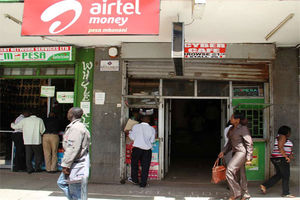
Digital financial services are also under scrutiny. The Bill proposes introducing VAT on payment processing, settlement and digital gateway services provided by financial technology platforms.
Industry players warn that this could raise the cost of digital transactions and create uneven competition between traditional financial institutions and emerging digital service providers.
They argue that increased costs would likely be passed on to consumers, potentially slowing the growth of Kenya’s fast-expanding digital payments ecosystem.
Despite the pushback, the Treasury maintains that revenue enhancement is unavoidable if Kenya is to meet its spending obligations without sharply increasing borrowing.
Officials argue that the government is already constrained by wage bills, debt servicing obligations and development commitments, leaving little flexibility for deep expenditure cuts.
Parliament now finds itself at the centre of competing pressures: appeasing taxpayers and businesses on one hand, while ensuring government can fund essential services on the other.
Lawmakers are expected to weigh amendments to the Finance Bill 2026 over the coming days, with political and economic stakes rising amid fears that poorly calibrated tax measures could trigger renewed public unrest.
As debate begins, the outcome will likely shape Kenya’s fiscal trajectory for the next financial year—determining not only how the government raises revenue, but also how much strain is ultimately placed on households and businesses already stretched by the cost of living.
For now, the search for compromise continues, with all sides warning that the wrong balance could carry heavy economic and political consequences.