A bungled compensation programme for families evicted from the Mau Forest has presented President William Ruto with a new humanitarian and political headache in the South Rift region.
More than 15,000 families left out of the compensation process are demanding to be paid while accusing administrators and government officials of sneaking the names of their cronies and relatives onto the list, even though they are not victims of the eviction.
An uproar erupted immediately after President Ruto announced at Tendwet Secondary School grounds in Narok South Constituency on August 26 that the government was compensating 13,000 families evicted from the Mau Forest in 2019.
Whereas the government registered 28,000 families as victims of the eviction, there was no explanation as to why 15,000 were left out of the compensation programme, with the President appearing keen, and in a hurry, to close the eviction question.
President Ruto also announced that the government had handed over the title deed for the land recovered following the eviction to the Narok County Government.
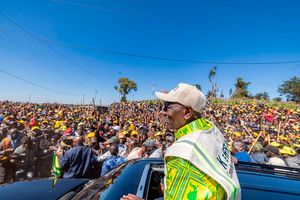
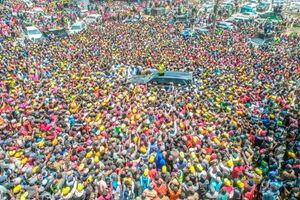
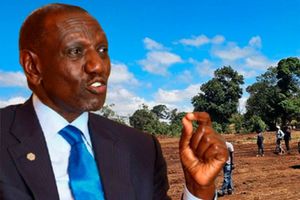
President William Ruto addresses members of the public after launching the construction of the 59km Enengetia-Olposimoru road in Narok County on August 25, 2026.
Photo credit: PCS
“We are today releasing Sh2.6 billion to a total of 13,000 families evicted from the Mau Forest. Each of the families will from now receive Sh200, 000 each as compensation,” Dr Ruto said as he announced the release of the funds, which were wired to the respective mobile phones of the benefiting victims of the eviction.
Dr Ruto announced that another 2,000 families who had been camping in Internally Displaced Persons (IDP) camps had earlier been paid Sh300, 000 each, leading to the closure of the makeshift structures they had lived in for more than six years.
“Never again shall the Mau eviction, resettlement and compensation issue be an election agenda, as we have put an end to the matter by compensating the families affected. As promised, we have closed this sad chapter before the 2027 General Election,” Dr Ruto said.
However, during the eviction in 2019, Trans Nzoia Governor George Natembeya, then serving as the Rift Valley Regional Commissioner, repeatedly announced that the government had evicted 61,000 families from the Mau Forest.
Governor Natembeya led the eviction, which was implemented by various government departments and security agencies, kicking up an uproar both in and outside government — with President Ruto then serving as Deputy President.
While the President thought that, with the release of the funds, the dark chapter in the cycle of unfulfilled promises had come to an end, the families who were left out walked out of the meeting.
Those who benefited also said the money was too little compared with what they lost in the eviction and the suffering they have been subjected to over the last seven years.
The row has now ballooned into a political headache, with 15,000 of the families who were left out protesting and threatening to invade the Mau Forest if they are not compensated like the second batch of victims who benefited last week.
The fresh row has reinstated the matter to the top of the list as a hot political potato, and one that will be exploited by opposition leaders in the 2027 General Election — unless the government offers an immediate solution to it.
The affected families said the money would not be enough to purchase a portion of land to resettle their families and was not adequate compensation for the tribulations they have undergone.
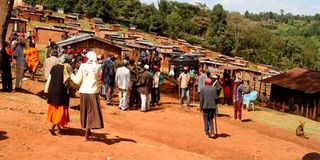
During a meeting at Olmekenyu Trading Centre on Thursday, thousands of families demanded an immediate explanation as to why they were left out and said the government should provide a way forward within the next seven days before drastic action is taken.
It followed a similar meeting held on Monday at the same venue, while another meeting has been scheduled for next week, with the affected families demanding answers from the government officials concerned with the programme.
Melelo Ward Member of the County Assembly (MCA) David Sulunye and nominated MCA Jefferson Langat Kiprukwen, who are close allies of Governor Patrick Ntutu, were not allowed to address the crowd and were eventually kicked out of the meeting.
President William Ruto during a tree-planning exercise in Mau Forest on October 27, 2025.
Photo credit: Boniface Mwangi | Nation Media Group
Mara Ward MCA Kipngeno Chepkwony, the only elected leader who addressed the protesting evictees, said there was a need for the government to relook at the matter with a view to compensating those who were left out.
“Let us engage the government and specifically the President on this matter so that we can find a lasting solution. Let us not politicise this issue so that the genuine people who have been left out of the compensation process can be considered for payment,” Mr Chepkwony stated.
Mr Chepkwony said: “The issues raised by the affected families are genuine, but we have to be careful about the way we address them so it does not become counterproductive. Let us take our problems to where we can get immediate solutions.”
Mr Fred Mutai, an evictee, said during the meeting that “the families had suffered long enough yet the government has added salt and pepper into an old wound, aggravating an already fragile situation.”
“We demand as an irreducible minimum that we be paid the compensation funds by the government as we are in the original list that was drawn up by a multisectoral team that included administrators from the national and county governments, security agencies and the Ministry of Lands,” Mr Mutai said.
Mr Leonard Cheruiyot, a Democracy for Citizens Party (DCP) official, said the money paid by the government was too little and that the government should have bought land and resettled the affected people whose records it has.
“It is unfortunate that the government has resettled IDPs in other regions while those in Narok South from one community have been sidelined, underpaid and the majority left out of the beneficiaries’ list,” Mr Cheruiyot said.
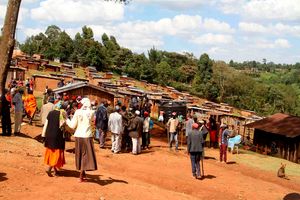
Mau forests evictees at one of the Internally displaced persons (IDP) camps in 2022 after being displaced during successive government-led eviction exercises.
Photo credit: File | Nation Media Group
The families said past governments had compensated IDPs with more than Sh450,000 each and alternative land ranging from one to two and a half acres each to resettle their families — a contrast to what those evicted from the Mau Forest were given last week.
“In God’s name, how can you give Sh200,000 to a person who lost five acres of his legally acquired land, and who had a genuine land title deed, one whose houses, business premises and granaries full of foodstuffs, among others, were torched by the security officers? That is an insult, to say the least,” Mr Cheruiyot said.
Women, most of them single mothers and widows, said they had been subjected to untold suffering as a result of the eviction eight years ago by former President Uhuru Kenyatta’s administration, yet the current government had failed to address their plight.
“We have lost young children and the elderly to harsh climatic conditions they were subjected to following the eviction, we lost land and other properties, with children dropping out of school, yet we have been left out of the compensation list despite our details being properly captured,” Ms Irine Keter, a victim of the eviction, said.
Narok West Member of Parliament Gabriel Tongoyo had, during the meeting convened by President Ruto at Tendwet, tried to bring out the issue of the families that had been left out of the compensation process, in vain.
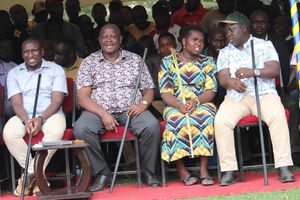
Mr Tongoyo’s address was cut short by Narok South MP Kitilai Ntutu (host), leaving the statement hanging as he was forced to hand over the microphone mid-sentence, as President Ruto and other leaders, including Governor Patrick Ntutu and Senate Majority Leader Aaron Cheruiyot, watched from the dais.
“We are grateful for the compensation received today by the 13,000 families, but there are those who were left out. If you find additional funds…,” Mr Tongoyo said as he was cut short amidst an uproar from those in the meeting.
Eviction in Narok South started in 2005 during former President Mwai Kibaki’s administration and in 2019 when former President Uhuru Kenyatta was in charge of the country, with Dr William Ruto as Deputy President.
Mr Kenyatta promised to resettle the affected families, but turned against them in his second and last term in office, while Dr Ruto repeatedly said ahead of the 2022 poll that he would compensate them when he assumed office.
Dr Ruto said during the meeting at Tendwet that the families had endured a lot and his administration was bringing the matter to a close.
“People who lived in IDP camps were rained on and their children died of severe weather conditions. It is unfortunate that they had to endure all that… We are closing the chapter on Mau Forest eviction today. It is no longer going to be a political question in the next and subsequent General Election,” Dr Ruto said.
But the resettlement and compensation question has returned and is proving to be a major political headache ahead of President Ruto’s tour of the South Rift next week.