The matatu is no longer just a vehicle. It is no longer the noisy 14-seater that ferried workers from Mathare to town, students to school, or traders to Gikomba. They have evolved into a political machine with its own language, gods, financiers, enforcers, artists, route commanders and negotiators.
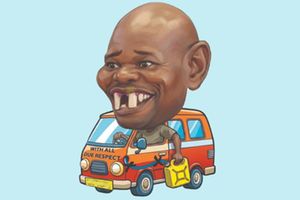
But to understand how we got here, we must return to one flamboyant politician-banker who saw the power of the matatu before many others saw it. His name was Andrew Kimani Ngumba.
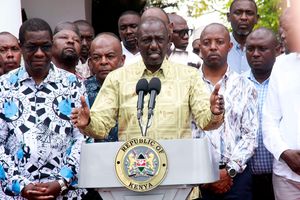
Last week, when matatu operators went to State House, Mombasa, to meet President William Ruto, Kenya was witnessing more than a transport negotiation. It was once again the formal recognition of a force that has grown from the chaos of Nairobi’s backstreets into a national political constituency.
President Ruto has realised that the matatu sector has become too large to ignore and too disruptive to antagonise carelessly. When matatus stop, the city coughs, and when they protest, roads become theatres of power.
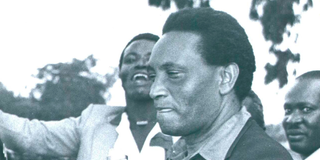
Former Nairobi Mayor and later Mathare MP, Andrew Ngumba.
Photo credit: File | Nation Media Group
Ngumba was not an ordinary man. He was one of those postcolonial hustlers of power who believed that politics, money and spectacle belonged in the same basket. A former Nairobi mayor and later Mathare MP, Ngumba wanted to be everything at once: real estate tycoon, banker, insurer, political kingpin and patron of the urban poor. He had the swagger of a man who believed that Nairobi was there for the taking.
When he bought Plot 209/2401 along Tom Mboya Street, he named it Ngumba House. At night, its neon sign announced his arrival to the city. From that address, he began constructing an empire that included Rural Urban Credit Finance, Blue Shield Insurance Company, Kenyawide Building Society and Countrywide Developers.
The idea was brilliant in its simplicity. One company would mobilise deposits. Another would lend. Another would insure. Another would develop property. The money would move within the same empire, and Ngumba would sit at the centre like a spider on a well-lit web.
But Ngumba’s genius was not merely in banking. It was in seeing the matatu as a vehicle of social mobility. When President Daniel Moi opened city routes that had previously been dominated by the Kenya Bus Service, Ngumba saw an opportunity, and moved in quickly.
Through Rural Urban Credit Finance, he introduced an unorthodox Matatu Savings Scheme. With a minimum deposit of Sh100, aspiring owners were encouraged to open “save-as-you-earn” accounts.
After a period of saving, the account could act as surety for a loan to buy a matatu. The vehicles were then insured by Ngumba’s own Blue Shield Insurance. It was capitalism with a populist face.
For the Nairobi worker who could not enter the old banking halls with confidence, Ngumba offered hope. For the young man who wanted to move from conductor to owner, he offered a ladder.
For the small trader who had watched the city enrich others, he offered a stake in Nairobi’s bloodstream. In just two years, Rural Urban Credit Finance reportedly had 10,000 customers. Ngumba did not merely finance matatus. He created a constituency.
Every Sunday, the matatu owners linked to him gathered at Ndururu Kiboro playground in Mathare to exchange views. While the phrase “exchange views” sounds innocent, it was in that place that matatu and city politics were blend together.
A constituency was being born through harambees, funerals, and route committees. Ngumba understood what many politicians would later learn: the person who finances movement can also move votes.
The matatu was a perfect political instrument and touched ordinary people daily. It employed drivers, conductors, mechanics, touts, painters, washers, stage managers and petrol station attendants.
By 1983, buoyed by his business success, Ngumba returned to politics and won the Mathare parliamentary seat, defeating Dr Munyua Waiyaki, a veteran of Nairobi politics.
Then Kanu nominee for the Mathare Parliamentary seat, Mr Andrew Ngumba (left), celebrates with his supporters after his nomination papers were accepted by the returning officer.
Photo credit: File | Nation Media Group
His victory was not accidental. He had built a financial-political machine among the very people who formed the city’s restless underclass. He had turned credit into loyalty, transport into identity, and matatu ownership into political capital.
In that sense, Ngumba was perhaps the first major “king of matatu” in the political sense. He did not simply own or finance vehicles. He grasped their power.
But, like many Kenyan empires built on proximity, ambition and weak regulation, Ngumba’s empire was running on dangerous fuel. Rural Urban Credit Finance borrowed short-term money and invested in long-term schemes.
As a result, depositors’ funds were stretched and related companies fed each other. As the real estate dream swallowed liquidity, Ngumba realised that the matatu revolution was no longer enough to save the books.
In July 1984, Central Bank inspectors walked into Ngumba’s office. What they found was shocking. Rural Urban Credit Finance had matured deposits it could not pay on demand.
Among those waiting for their money were Co-operative Bank, Murang’a County Council and Kenya National Capital Corporation. The figure mentioned in the account was Sh140 million in deposits that had matured but had not been honoured.
As creditors moved in, the matatus he had financed were pulled off the roads and auctioned. The projects under his name stalled. Ngumba Estate, one of the physical monuments of his dream, became part of a wider story of ambition, collapse and survival.
Ngumba fled to Norway and reinvented himself as an anti-Moi dissident. But Kanu knew how to fight such reputational wars. In demonstrations organised against exiles, placards mocked him as “Ngumba-Mwizi,” lumping him together with Koigi wa Wamwere and Ngugi wa Thiong’o in the theatre of Nyayo propaganda.
Others learned from his mistakes. Equity Building Society, registered in October 1984 by Peter Munga, and Family Finance Building Society, associated with Titus Muya, emerged in the same era, serving low-income customers and building a more cautious model. The matatu sector, meanwhile, continued to grow beyond the control of any one man. It became more organised, more defiant and more politically useful.
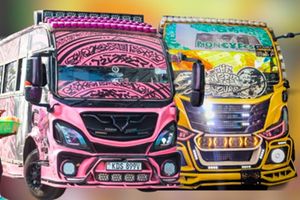
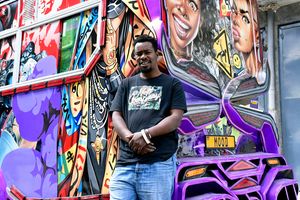
Today, the matatu is not a marginal urban nuisance. It is one of Kenya’s most important informal institutions. It moves the labour force. It sets the rhythm of Nairobi. It shapes youth culture through graffiti, music, fashion and Sheng. It gives work to thousands who would otherwise be condemned to the margins. It has its own celebrities, its own aesthetics, its own justice systems and its own economy of fear and favour.
That is why the recent meeting with President Ruto matters. When fuel prices rose and transport operators threatened to resume their strike, the government did not treat them as mere traffic offenders. It treated them as stakeholders.
The strike had disrupted daily life, closed schools and businesses, and forced government into negotiation. According to AP, the operators met Ruto and agreed not to resume the strike after he pledged that diesel prices would be reduced in the next review.
The President could not ignore them because matatus sit at the intersection of three combustible issues: fuel prices, cost of living and urban anger.
A rise in fuel prices does not remain inside the petrol station. It travels into fares, food prices, wages, school attendance and market supply. When matatu operators protest, they speak not only for themselves but also for commuters who already feel squeezed by taxation, rent, food and school fees.
That is why State House has discovered what City Hall knew long ago: you do not govern Nairobi without understanding the matatu.
Former Nairobi Mayor and later Mathare MP, Andrew Ngumba.
Photo credit: File | Nation Media Group
But the matatu’s rise also raises difficult questions. Who speaks for the sector? The owner? The Sacco chairman? The driver? The conductor? The tout at the stage? The commuter who pays the fare? Or the political broker who appears at State House claiming to represent everyone?
The matatu industry is powerful, but it is not democratic in any clean sense. Its internal politics can be opaque. Route control can be violent. Fares can be arbitrary. Commuters are often helpless. Drivers and conductors work under pressure to meet daily targets.
Owners speak the language of investment, while workers speak the language of survival. So when leaders of the sector walk into State House, one must ask: are they negotiating for the public, for the owners, for the drivers, or for themselves?
Ngumba’s story warns us about this confusion. He spoke the language of empowerment but built an empire around himself. He opened doors for small investors but also trapped many within a fragile financial architecture.
He democratised access to matatu ownership, but his collapse left vehicles auctioned, and dreams broken. His genius and danger came from the same place: he fused public need with private ambition.
The matatu has solved a problem the state failed to solve. It entered where public transport collapsed. It reached estates where formal buses were absent. It absorbed unemployed youth. It turned art into mobile expression. It gave Nairobi its soundtrack.
Yet it has also produced disorder, extortion, impunity and cartel politics. It is both solution and problem. It is freedom and menace. It is enterprise and anarchy.
That is why the State House meeting should not be read only as a victory for matatu owners. It should be read as a mirror held up to Kenya. We have allowed an informal system to carry the burden of public transport for decades.
We have punished it, praised it, regulated it, deregulated it, removed graffiti, ordered it back, chased it from the CBD, invited it back, blamed it for chaos, and then called it to State House when the country nearly stops moving.
In the end, the matatu has done what many institutions failed to do: organise the street.
The matatu is a political force. It can no longer be treated as a nuisance to be chased by kanjo (county government askaris) or lectured by traffic police. It is a constituency and an economy. It is a bargaining bloc, and a warning that when the state fails to provide order, citizens will build their own — noisy, colourful, dangerous and impossible to ignore.
John Kamau is a PhD candidate in History, University of Toronto. Email: [email protected] ; On X:@johnkamau1