From the 2007/2008 violence that left more than 1,100 people dead and 600,000 others displaced, to the disputed 2017 presidential contest and the 2022 General Election, Kenya's electoral history has repeatedly been punctuated by political tension.
Each election cycle has tested the country's institutions and revealed how quickly competition over State power can spill into violence when accountability lags behind ambition.
And as the 2027 General Election edges closer, the familiar spectre of political intolerance has returned with vengeance, raising fears of a repeat of the deadly 2007/2008 election violence.
Even before official campaigns begin, drums of war have been beaten and political incitement is rife.
From rising political goonism in the country to inflammatory rhetoric by politicians, the warning signs are everywhere.
Sharp personal attacks, accusations, emotionally charged remarks and statements perceived to target particular communities have become more common, drawing criticism from religious leaders, civil society organisations and peace-building groups.
For Kenyans, the developments inevitably revive memories of the 2007/2008 post-election violence, when tensions escalated into one of the country's darkest periods.
Political analysts, clergy and experts now warn that if political intolerance and ethnic balkanisation are left unchecked, Kenya risks plunging into election chaos.
“We must endeavour to solve our political differences in a civil manner, so as not to plunge the country into a state of violence,” he said
Former Makueni Governor Prof Kivutha Kibwana also warned that Kenya risks a repeat of the 2007 post-election crisis if leaders continue to prioritise the pursuit of power over the needs of citizens.
“If we are not careful, 2027 could become as dangerous a point as 2007/2008. When everyone claims they are right and nobody is willing to admit they are wrong. We need a conversation as a country, a national dialogue,” stated Prof Kibwana during an interview on a local radio station.
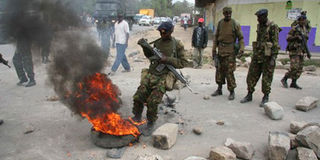
Post-election protests in Nairobi in 2017.
Recently, the Kenya Conference of Catholic Bishops (KCCB) warned that the rising culture of political violence, goonism and ethnic balkanisation could plunge the country into chaos, especially as the 2027 General Election inches closer.
“The culture of goonism and verbal indiscipline is pushing the country into violence. The emergence of controlled criminal elements ahead of the 2027 General Election is worrying and disturbing,” said KCCB chairman Bishop Maurice Muhatia.
“Politicians must also be careful with their utterances in public as we head to elections. The trend poses a serious threat to national unity,” he added.
The rising political tensions and concerns that Kenya could be headed into political violence early this week prompted the National Cohesion and Integration Commission (NCIC) to intervene and summon several politicians over alleged hate speech, in a bid to tame ethnic profiling and balkanisation ahead of the 2027 polls.
The NCIC has summoned former Deputy President Rigathi Gachagua, Health Cabinet Secretary Aden Duale, his Public Service counterpart Geoffrey Ruku, and Mukurwe-ini MP John Kaguchia to record statements over allegations of hate speech.
The commission said the four leaders are expected to appear before investigators beginning next week.
It further confirmed that an investigation file relating to Mr Gachagua has already been forwarded to the Office of the Director of Public Prosecutions (ODPP) for consideration, after investigators completed their work.
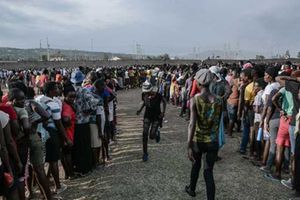
Mawingu IDP camp where people who fled their farms during the 2007 post-election violence had settled.
Photo credit: File | Nation Media Group
The commission also warned that its summonses carry the force of law and that any individual who fails to honour them risks the issuance of a warrant of arrest.
The latest action by the NCIC marks one of the most significant interventions by the cohesion watchdog, as political activity begins intensifying ahead of next year's General Election.
“NCIC will not tolerate ethnic profiling, inflammatory rhetoric and incitement by political leaders. The increasing political intolerance, use of goons and violations of civil and political rights pose a serious threat to Kenya's democratic future. Politicians found culpable of incitement and ethnic profiling will face the full force of the law,” NCIC chairperson Kepha Nyamweya Omae says.
Although investigations into alleged hate speech involving politicians are not new, the decision to summon senior government officials demonstrates the NCIC's attempt to show that the law applies across the political divide.
“Electoral violence is not a single-day event; it happens gradually through political intolerance, public frustrations and declining confidence in institutions, before erupting into open confrontation. Our institutions like the National Cohesion and Integration Commission (NCIC), National Police Service, the Judiciary, the Office of the Director of Public Prosecutions and the Independent Electoral and Boundaries Commission (IEBC) must work closely to avert a repeat of the 2007/2008 post-election skirmishes,” Governance expert David Ngugi said in an interview.
Bungoma Governor Ken Lusaka warns against unchecked ethnic profiling and political goonism, saying such acts could evolve into a much bigger threat as the country heads into the 2027 General Election.
“What happened in the 2027 General Election is still fresh in our minds. I want to appeal to my colleague politicians, please let us stop mobilising goons to disrupt functions. We are slowly driving the country into an abyss of violence. Let us not prepare our country for anarchy,” said Governor Lusaka.
Internally displace people demonstrate at the Uasin Gishu County Commissioner’s premises in Eldoret town, who were affected during the 2007/2008 post-election violence, protest demanding to be paid compensation on July 05, 2017.
Photo credit: File | Nation
The latest Kofi Annan Foundation report, released on July 14, 2026, estimates an 84.1 percent probability of election-related violence during the 2027 General Election. The Electoral Vulnerability Index 2026-2027 says Kenya has made democratic gains since the 2007 post-election crisis, but key triggers of conflict remain unresolved.
The report identifies rising political intolerance, ethnic mobilisation, economic hardship, youth frustration, weak public trust in institutions and the growing use of political goons as a “recipe for chaos”. It says economic frustration is becoming an increasingly powerful mobilisation tool, with unemployed young people vulnerable to recruitment to disrupt rival campaigns. Recent disruptions of political meetings in Kisumu, Kisii, Nyahururu, Nyeri and other areas have heightened concerns that political violence is becoming institutionalised.
“The political environment since 2022 has been marked by economic hardship, tax protests, opposition mobilisation, debates over the cost of living and public anger over corruption and police conduct,” the report says, warning that the 2027 election could combine presidential competition with wider accountability demands.
The foundation says Kenya’s relatively independent Judiciary, constitutional safeguards, vibrant civil society and improved electoral dispute mechanisms offer protection, but these are being undermined by political divisions, unresolved grievances and declining trust in State institutions. It warns of possible attacks on political rallies, localised ethnic clashes, violent demonstrations and confrontations with security agencies.
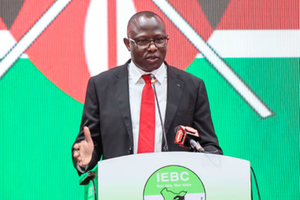
The report urges the IEBC to publish its operational calendar early and strengthen safeguards around technology procurement, voter registration and results management. “Predictability is a central violence-prevention tool,” it says, adding that election security should be transparent, rights-based and locally informed.
A woman cries outside the Kiambaa church in which several people were burnt to death during the post-election violence of 2008. PHOTO | FILE | NATION MEDIA GROUP
The foundation says the next 12 months will be critical, with the IEBC’s credibility likely to determine public confidence in the electoral process. It also notes that Kenya’s elections have historically become volatile when closely fought presidential contests intersect with ethnic politics, land disputes, youth unemployment and declining trust in electoral institutions.
The report further warns that the death of former Prime Minister Raila Odinga in October 2025 has altered the opposition landscape and introduced uncertainty over succession, alliances and the mobilisation of his political networks. “Coalition-building before 2027 may also affect violence risk,” the foundation says, warning that failed negotiations could leave communities feeling excluded and that inherited political loyalties, youth mobilisation and county-level patronage networks may not move in the same direction.
Another report released in January 2026 warned that the widening gap between political establishments of African countries and Gen Zs, unless addressed adequately and in a timely manner, could trigger unrest and violence during the pre-election, election and post-election periods.
In recent months, opposition leaders have repeatedly accused the government of tolerating politically sponsored violence after a string of attacks on their meetings across the country.
Among the incidents cited are attacks targeting Wiper leader Kalonzo Musyoka, Democracy for Citizens Party (DCP) leader Rigathi Gachagua and the Edwin Sifuna-led Linda Mwananchi group.
To the opposition leaders, these incidents are not isolated acts of lawlessness but early warning signs of a deteriorating political environment.
President Mwai Kibaki and Raila Odinga stand next to each other before signing a grand coalition deal at Harambee House witnessed by the chief mediator, Kofi Annan, in 2008.
Photo credit: File | Nation Media Group
Democratic Party leader Justin Muturi told the Nation that the resurgence of organised political gangs threatens not only Kenya's democracy but also its economy and international standing.
“Failure to hold perpetrators accountable risks normalising violence. These are drumbeats of election violence. Respective institutions must act to stop this madness,” said Muturi.
According to Wiper leader Kalonzo Musyoka, the recent report by the Kofi Annan Foundation should serve as a wake-up call to both the government and the IEBC to do things right.
“With the many incidents of violence witnessed across the country, Kenya risks sliding into chaos in 2027. The projected likelihood of electoral violence should concern every Kenyan because instability would extend far beyond politics. More than 80 percent likelihood of violence is terrible news for this country. We must all act together to avert chaos,” said Kalonzo during a recent interview on a local television station.
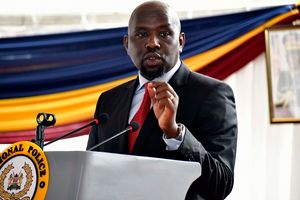
Inspector General of Police Douglas Kanja has sought to reassure Kenyans that the National Police Service is preparing early to secure future elections.
Director of Criminal Investigations Mohamed Amin has similarly pledged that detectives will investigate all cases of political violence without fear or favour.
As the 2027 election inches closer, international partners are watching closely.
Before the 2007/2008 post-election skirmishes, two major investigative documents, such as the Waki Report and the Kriegler Report, formally documented institutional failures and incitement that led to the violence.
Although Kenya has since undergone major constitutional, electoral and institutional reforms, the rise in temperatures ahead of next year's General Election has been described as worrying.