Young Kenyans are the most pessimistic in Africa about their country’s economic prospects and job opportunities, reflecting growing anxiety over livelihoods amid persistent unemployment and slow job creation.
The 2026 African Youth Survey, which covered 16 African countries, found that Kenya ranked last in confidence about both the economy and future employment prospects among people aged 18 to 24.
Conducted by US-based research consultancy PSB Insights and the Ichikowitz Family Foundation, the survey found that 79 per cent of Kenyan respondents believed the country’s economy was headed in the wrong direction. Only Mozambique posted a higher level of pessimism at 82 per cent, while 76 per cent of Nigerian youth and 74 per cent of South African youth expressed the same view.
The report says Kenya is moving against a broader continental trend in which optimism has improved in several countries since the previous survey in 2024.
“Compared to 2024, confidence has grown notably in Ethiopia, Ghana and Zambia. Kenya runs counter to this trend, however, where optimism about country direction has declined since the last wave, likely reflecting the financial strain on households, softening economic forecasts and heightened regional instability,” the survey says.
The findings underscore mounting pressure on Kenya’s labour market, where high youth unemployment, widespread informal employment and a mismatch between graduates’ skills and available jobs continue to limit opportunities.
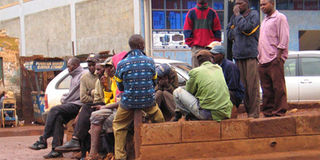
Jobless youth in Nairobi. Graduates enter the job market with the hope of getting formal employment.
Photo credit: File | Nation Media Group
Although sectors such as manufacturing, agriculture and tourism have recovered from the Covid-19 pandemic, they have struggled to generate sufficient employment amid weak consumer demand and high operating costs.
Official data shows the economy created 101,000 formal jobs last year, up from 76,000 in 2024, according to the Kenya National Bureau of Statistics (KNBS). The increase marked a recovery from the slowdown in formal employment but remained far below demand from new entrants into the labour market.
Nearly 90 per cent of all jobs created during the year were in the informal sector, highlighting the limited capacity of the formal economy to absorb graduates leaving universities, colleges and technical institutions each year.
The survey also found that 70 per cent of Kenyan youth identified unemployment and poverty as the biggest threats to community safety, with respondents ranking youth job creation as the country’s top security priority.
“Young Kenyans want pathways into jobs, confidence that essential services will be protected and international partnerships that create real opportunity. The task now is to convert that energy into inclusion, growth and shared progress,” said Ivor Ichikowitz, founder and commissioner of the African Youth Survey. The pressure is expected to intensify as more students complete tertiary education.
Data from the Commission for University Education shows that 123,928 students graduated from Kenyan universities in 2024, up from 99,829 a year earlier. The number rises further when graduates from Technical and Vocational Education and Training (TVET) institutions are included.
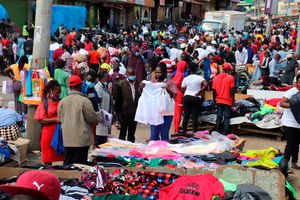
While the informal sector continues to provide livelihoods for millions of Kenyans, many of its jobs are characterised by low and unstable incomes, limiting prospects for economic advancement.
The survey found that access to employment was the strongest factor shaping young people’s confidence in their countries’ economic direction.
“In markets where concern about the lack of jobs has fallen considerably since 2024, optimism about the country’s direction has tended to rise in step,” the report says.
Kenyan youth also expressed the bleakest outlook on African economies generally. Seventy per cent said they believed economies across the continent were headed in the wrong direction, ahead of South Africa (69 per cent), Nigeria (60 per cent), Mozambique and Togo (58 per cent each), and Chad (53 per cent).
The 2026 African Youth Survey covered respondents in Burkina Faso, Chad, Congo Brazzaville, the Democratic Republic of the Congo, Ethiopia, Ghana, Kenya, Liberia, Mozambique, Nigeria, Rwanda, Somalia, South Africa, Togo, Zambia and Zimbabwe, examining youth perspectives on economic, political and social issues.