Every evening, after arriving home from work, Hannah* reaches for the bottle of gin tucked in the back of her fridge, mixes it with lemonade and ice, and drinks. Sometimes one glass is enough; other nights she pours a second or third.
“I don’t think I have a drinking problem, but I do drink every day,” says the 32-year-old who owns a beauty shop in Nairobi.
“As a startup founder, my job is demanding, stress levels are high, and I have little time for healthier stress-relievers like exercise. Pouring myself a G&T, or three, is the break my brain needs.”
Hannah’s story is far from unique. Research from the National Authority for the Campaign Against Alcohol and Drug Abuse (Nacada) shows alcohol use among women is a growing public health issue. The 2022 National Survey found that one in 20 females aged 15–65 were current alcohol users, compared with one in five males.
Among university students, the numbers are starker. Nacada’s 2024 study revealed that 15.7 per cent of female students had consumed alcohol in the previous month, compared with 21 per cent of male students.
Simon Mwangi, deputy director, corporate communications at Nacada, says, “While women continue to report lower alcohol use than men, the data demonstrates that alcohol use among women, particularly young women, is a substantial issue that warrants targeted prevention and support.”
Behind wine nights with friends, after-work cocktails, Sunday brunch and bottles hidden behind cereal boxes or beneath kitchen sinks, many women are fighting battles they rarely admit aloud. Unlike men, whose drinking is often dismissed as excess or habitual, women who lose control risk being branded irresponsible mothers, failed wives, or wayward women.
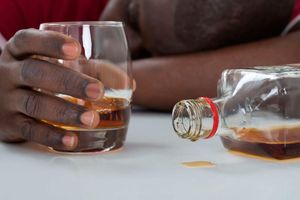
Behind wine nights with friends and after-work cocktails, many women are fighting battles they rarely admit aloud.
Photo credit: Shutterstock
Brenda*, a married mother of two, is a former radio host. From the outside, one would think that all was well with Brenda. However, alcohol was slowly taking over her life.
She would juggle taking care of her child, her house, and still report to work every afternoon for her evening drive show.
“After my show, I would order a mzinga [alcohol] and polish off a couple of stiff shots after putting the kids to bed. I would then share a bottle of wine with my husband at dinner. As I cleaned up the dishes, I would open another bottle,” she recalls.
For eight years, Brenda woke up each morning with a hangover, promising herself she wouldn’t drink that day. She even decided to have a second child, thinking pregnancy would force her to stop.
Traditionally, women tend to reduce their alcohol consumption once they have children, but in recent years, more middle-aged women have delayed or skipped motherhood. This growing trend is contributing to an increase in women at highest risk for excessive alcohol use, according to a new study led by a School of Public Health researcher.
Published in the journal Addiction, the study found that women who turned 35 in recent years, as well as women who have not had children by age 35, are the subgroups of women at highest risk of binge drinking and having alcohol use disorder (AUD) symptoms.
But Brenda’s drinking gradually became a daily habit. She soon found herself hiding bottles, and she drank throughout her second pregnancy and breastfeeding. By the time she decided to quit, she was putting vodka in her coffee and moving around with a small flask inside her bag that contained alcohol.
“I felt so ashamed of my drinking, but I also envied people who had the time to invest in their well-being. Frequent blackouts eventually led me to AA meetings in Utawala. Later, I quit radio and moved out of Nairobi. It is interesting that nowadays I actually find time to exercise by taking long walks or going for a run.”
Joyce* started as a social drinker. She could not stand the smell of alcohol when she was pregnant with her children. Yet, her drinking began escalating after her third and last child was born.
Joyce had rules. She only drank after 5pm, and she would not drink with strangers. As the alcohol began to take over her life, she withdrew from her friends. Joyce would buy it, hide it, drink it, and then get rid of the bottles. It became a full-time job.
Another drinker, Lydia* pours herself what she calls “one glass” almost everyday at 10:45 pm, after washing the dinner plates and putting her children to bed. She never uses a wine glass anymore. It became too easy to measure how much she was drinking.
“I drink from a water glass, which I hide behind a sufuria. If someone comes into the kitchen, I'll pretend to open a new bottle rather than finish a nearly empty one. This past year has been hard, with family problems and personal issues, so I've drunk most nights secretly. I'm very conscious of my health, but this is my weak spot. I am worried about the impact [of drinking] on my fertility, but this is one habit I can't break. I am single and live alone, so there's no one to see or comment on my drinking. My friends have no idea how much I drink at home. It's not something we talk about,” she says.
Lydia’s words capture the paradox of modern womanhood—strong, capable, but still vulnerable. These stories reveal a pattern: Women drinking in secrecy, burdened by stigma, and trapped between social expectations and personal struggles.
Alcohol and substance-use disorders are deeply affected by stigma, and for women, the weight is heavier. Stigma discourages women from acknowledging problematic drinking or seeking treatment. Social expectations around motherhood, family, and “acceptable” behaviour mean women often hide their struggles until they spiral.
As Nacada notes, lower reported prevalence does not equate to lower vulnerability. Women may drink less frequently than men, but the consequences—health risks, family strain, and social judgment—can be more severe.
“This is an area where more sex-disaggregated research is needed, particularly on frequency, quantity, binge drinking, alcohol-use disorders, treatment-seeking behaviour and the social factors driving women's alcohol use. Yes, it is reasonable to believe that the available figures may underestimate the true burden among women. We should be cautious about assigning a specific percentage to that under-reporting without direct evidence,” says Mr Mwangi.
Kenya is witnessing shifting norms. It is not unusual, for instance, to see women swirl wine glasses at rooftop bars, sip cocktails at ladies’ nights, and toast with friends over imported whiskey.
It looks like liberation, a sign of changing times. This public embrace of alcohol may be influenced in part by social media-driven “wine-mom” culture, which encourages mothers to drink to cope with the challenges of motherhood and work, and for recreation through hashtags such as #winemom, #sendwine, and #mommyjuice.
Simultaneously, there has been a rapid increase in alcohol products targeting middle-aged women, such as low-calorie ciders, pink beverages, and expressions such as ‘rosé all day.’”
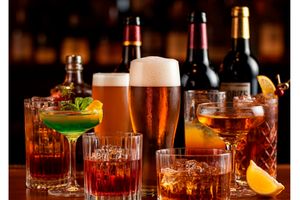
There has been a rapid increase in alcohol products targeting middle-aged women.
Photo credit: Shutterstock
Wine, it seems, has practically become the must-have accessory for modern motherhood. Many beauty shops now host monthly wine bars for in-store shoppers. Designers like Dior have come up with women's purses with hidden pockets to store wine spouts, and trendy travel mugs regularly feature phrases like 'This might be wine,' in adorable, cursive font.
Posts of women toasting with wine or whiskey are common. American singer Rihanna even sang about it in her songs, “Oh, let the Jameson sink in. I drink to that, yeah, yeah,” a telling echo of the global cultural shift. But what looks glamorous online can mask harmful consumption patterns.
“There are indications of changing social attitudes around women’s alcohol consumption, particularly among younger, urban populations,” says Nacada’s Mr Mwangi. Nairobi, for instance, recorded the highest prevalence of manufactured legal alcohol use at 10.3 per cent.
But not all women’s drinking is problematic. For some, it is about empowerment, choice, and culture.
MaryAnn Mumbi, President of Women Who Whiskey, describes her members as “bold, unapologetic, not afraid. They understand whiskey, want to know more, and enjoy it responsibly.”
Women Who Whiskey-Nairobi is an extension of Women Who Whiskey (wWw), a global women’s networking and educational organisation, dedicated to creating a space where members can cultivate their passions for community and whiskey.
Ms Mumbi notes that whiskey carries history and culture, and women, natural storytellers, are reclaiming space in what was once a male-dominated domain.
“If you (a woman) go to a bar with a man and order whiskey and wine, the wine will automatically be placed before you. Our members challenge that bias. And we don’t drink to become unruly. Some drinks are for occasions. When you open a 21-year-old whiskey, you drink it with respect, to enjoy the moment.”
Ms Mumbi’s sentiments are echoed by Wendy Njoroge, founder of Books & Wine. Ms Wendy never set out to build a movement around books and wine.
The idea was born in 2019 after her first wine tasting left her fascinated by “the revelations, intricacies, history and complexities of the world of wine.”
As a lifelong reader who had already spent four years running a large corporate-sponsored book club, she knew how to get conversations flowing.
For Wendy, the pairing of books and wine is less about alcohol than about creating room for people to pause. She says the ritual of pouring a glass and discussing a book lowers people's guard, allowing conversations to evolve naturally.
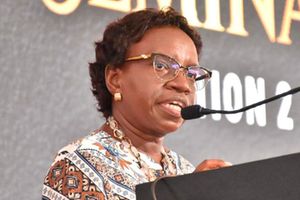
Not all women’s drinking is problematic. For some, it is about empowerment, choice, and culture.
Photo credit: Shutterstock
"Books make you think, wine makes you stay on," she says. "The book is always the starting point rather than the destination."
Before long, discussions about fictional characters often become conversations about marriage, motherhood, money, friendship and the choices people have made in their own lives.
Wendy believes the gatherings also reflect a broader shift in how women are claiming ownership of their social lives. While society has long expected women to enjoy themselves within invisible boundaries, she says many are now choosing where they go, who they spend time with and how they unwind without apology.
"Books & Wine isn't about encouraging women to drink. It is about creating a space where women can gather, have a drink if they want one, talk about books, laugh loudly, disagree, flirt with ideas and generally take up a little more space."
After years of hosting these conversations, Wendy says she has learned that many women are carrying immense pressure while making it look effortless. Between work, family and the expectation to have life figured out, what they often crave is a space where they do not have to perform.
"Sometimes we don't need another networking event or another productivity hack. Sometimes we just need to sit around a table, drink something, talk about a book and remember that we are people before we are all the roles we carry."