The Shakahola massacre was not the work of one man acting alone. Behind the deaths of 429 followers of Good News International Ministries (GNI), associated with controversial preacher Paul Nthenge Mackenzie, was a network of religious leaders and other individuals whose roles came under scrutiny during one of Kenya’s most disturbing criminal trials.
At the centre of the tragedy was Mackenzie, whose teachings persuaded followers to abandon basic needs, including food and water, in pursuit of what they believed was salvation. But as investigations unfolded and witnesses testified in court, a wider picture emerged of individuals who helped sustain the activities that culminated in the deaths.
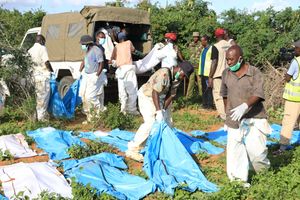
On Monday, the High Court delivered a nearly 1,000-page judgment examining the evidence against Mackenzie and his co-accused. The findings brought into focus the different roles played by those involved, from spreading the teachings and enforcing fasting to guarding followers, obstructing rescue efforts, and burying the dead.
The judgment went beyond the preacher whose name became synonymous with Shakahola to examine how different individuals' actions combined to sustain the deadly fasting regime.
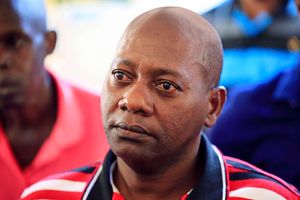
Pastor Paul Mackenzie follows proceedings during the High Court verdict delivered by Justice Diana Kavedza at the Mombasa Law Courts on October 19, 2026.
Photo credit: Kevin Odit | Nation Media Group
Mackenzie, head of GNI, its chairman, and co-director of Times TV, was at the centre of the tragedy. The court found that he radicalised followers through six pillars of teaching that rejected education, modern medicine and government institutions; isolated believers from outsiders and urged them to relocate to Shakahola, which he presented as a place prepared by God.
His teachings had devastating consequences for children. Followers were persuaded to deny them food and water in the belief that they were sending them to Jesus. Mackenzie issued a sequential fasting directive that began with children and prescribed dry fasting. Those who resisted were to be forced into submission “kwa mangumi na mateke”, or through blows and kicks.
The court heard how children died from starvation and treatable illnesses as parents rejected medical care. Resistance was met with beatings, restraint, and confinement, while the teachings encouraged followers to sever ties with the outside world.
Even death was given a religious meaning. Mackenzie presided over what were described as “wedding” burials and celebrated dead children as “shujaa wa imani”, or heroes of faith.
The court found that Mackenzie acted with direct intention to cause death under Section 206(a) of the Penal Code. His directive that followers fast to death to attain heaven was central to that finding.
Mackenzie organised Shakahola into 12 villages bearing biblical names to ease administration of the settlement. Each village had leaders who reported directly to him and helped enforce his teachings and fasting regime. The villages included Galilaya (Galilee), Judea, Tiro, Sidoni, Bethlehem, Samaria, Capernaum, Emmaus, Bethany and Sikari.
Smart Deri Mwakalama, GNI secretary and Mackenzie’s second-in-command, helped turn the preacher’s teachings into an organised system. He transported followers to Shakahola, relayed instructions, apprehended escapees, assaulted a witness and supervised burials.
Stephen Sanga Muye, the head of security, assaulted witnesses, dug graves, and reburied the children of Isaac Ngala, a General Service Unit officer who also died in the tragedy.
Evans Kolombe Sirya, a village elder, summoned meetings, participated in assaults and burials, and drafted a land agreement linked to the settlement at Shakahola.
Other security personnel helped keep followers from leaving or receiving assistance. Alex Munangwe Odari apprehended escapees, including a witness who later described how he managed to flee the forest. He guarded fasting areas with clubs and pangas. During rescue efforts, guards moved people fasting deeper into the forest.
Mwinzi Kavenge helped block attempts to reach those undergoing fasting and used violence against people trying to assist them. He attacked a witness with a panga during a rescue attempt.
Alfonze Chomba Eliud posed as a Directorate of Criminal Investigations officer to prevent followers from escaping. He also transported bodies to burial sites within the forest.
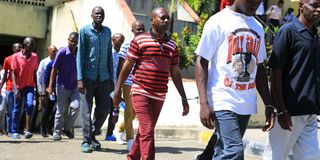
Pastor Paul Mackenzie (in stripped t-shirt) with his co-accused persons at the Mombasa Law Courts on October 19, 2026 after they were found them guilty in 191 counts of murder in the Shakahola case.
Photo credit: Kevin Odit | Nation Media Group
Their different functions helped maintain control over followers, restricted their movement and obstructed attempts to rescue those in danger. The court’s findings showed how security and enforcement activities supported the fasting regime.
Some of the most disturbing evidence concerned parents who followed the teachings and subjected their own children to fasting.
Enos Amanya Ngala pleaded guilty to all 191 counts and confessed to fasting and burying his six children. His wife, Ann Anyoso, withheld food and water from their six children, who died. She still believes that the children ascended to heaven.
Titus Munyao Musyoka served as a guard, gravedigger, and body transporter. The court heard that he watched as food was confiscated while his seven children died.
Lucas Owino Ogola, a pastor and close ally of Mackenzie, prepared shallow graves for children. In assessing his claim to be an innocent pastor, the court questioned how he could have remained unaware of the deaths, burials, and flattening of graves. It reasoned that he could not pretend to be a visitor in Jerusalem when he had failed to report what was happening around him if he was indeed an innocent pastor.
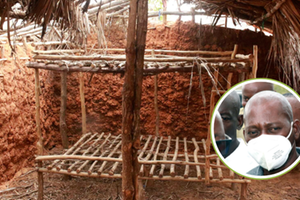
Gilbert Kea Katana converted the homesteads into fasting bays, locked his children inside, and assaulted a son who tried to escape.
These accounts exposed how the teachings reached into family life, with children dependent on adults for food, protection, and the chance to escape. The court emphasised that parental responsibility is a legal duty to protect a child’s life, health and welfare, not a right to sacrifice a child in pursuit of religious belief.
Other accused played roles that supported the system in different ways. Michael Mweri Baya, a videographer and interpreter of dreams, disseminated Mackenzie’s teachings and dug graves. Peter Ramadhani Kahaso, who managed the “Peter Menza” YouTube channel, spread the preacher’s summons and teachings while also serving as a security guard and preventing followers from leaving. His daughter Sarah died during the fasting regime.
The court’s findings linked these functions to a wider system in which preaching and instruction were reinforced by surveillance, intimidation, restricted movement, grave digging, and the concealment or relocation of bodies. These activities were relevant to determining whether individual accused persons knowingly participated in a common purpose that carried a probable risk of death.
The court found that malice aforethought was established against Mackenzie under Section 206(a) of the Penal Code because his directive to fast to death demonstrated direct intention to cause death. For those who knowingly enforced the fasting regime, the court considered Section 206(b), which concerns knowledge that death or grievous harm is a probable consequence of an act.
The continued enforcement of fasting despite visible deterioration, repeated deaths and attempts to resist was relevant to determining whether individuals appreciated the likely fatal consequences. Violence used to compel obedience, as well as the concealment of graves and relocation of bodies, also formed part of the evidence the court considered when assessing individual responsibility.
Under Section 21 of the Penal Code, the court found that the prosecution had established an organised system supported by differentiated but interdependent functions, including leadership, village administration, security, enforcement of fasting, transportation of bodies, grave digging, and concealment of deaths.
The judgment therefore linked the tragedy to more than the teachings of one preacher. It examined how the actions of people in different positions enabled the fasting regime to continue while requiring each accused’s responsibility to be established on the evidence.