For years, maize farmers in Kenya’s grain basket of the Rift Valley have relied on loans to finance their agricultural activities, confident that a good harvest would help them repay lenders and invest in the next planting season.
However, this season is different. Hundreds of farmers who borrowed millions of shillings from financial institutions face a painful reality of a failed crop, mounting debts and fears of losing their land.
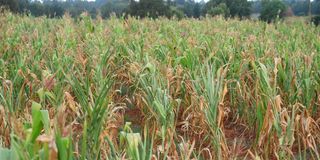
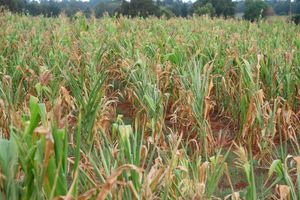
Prolonged drought, inadequate top-dressing fertiliser and renewed attacks by the fall armyworm have damaged maize fields across the North Rift, leaving farmers who secured seasonal loans from institutions such as the Agricultural Finance Corporation (AFC), Kenya Commercial Bank (KCB) and Equity Bank staring at heavy losses.
The projected decline in maize production has raised concerns over possible loan defaults, with some farmers warning that creditors could move to recover the money through auctioning of their property.
At Moi’s Bridge in Uasin Gishu County, farmer Mr Samuel Macharia is struggling with how to repay a Sh1.5 million loan he took from KCB to finance his 70-acre maize plantation.
Mr Macharia says he has borrowed from the bank every year and has always repaid the money after selling his produce. This season, however, the prolonged dry spell destroyed his crop at a critical stage.
“I borrow loans from KCB annually to plant maize and normally repay the money after selling the produce without defaulting. But the projected poor yield will subject me to financial difficulties,” he said.
The farmer had expected to harvest about 1,500 bags of maize and earn more than Sh6 million, proceeds he planned to use to clear the loan and prepare for the next planting season.
“My wife borrowed an additional Sh1.2 million from Equity Bank to purchase a second-hand tractor to help us invest in mechanised farming. These are loans we could have easily repaid from the proceeds of the harvest, but everything has gone down the drain because of drought and crop diseases,” the farmer said.
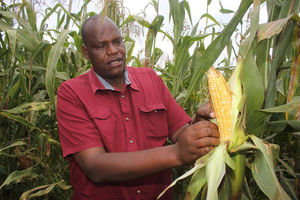
Farmers inspect their failed maize crop in Mirera, Naivasha, Nakuru County, on July 12, 2026.
Photo credit: Boniface Mwangi| Nation Media Group
In Ziwa, Uasin Gishu County, farmer Mr Michael Kosgei says he may not be able to repay a Sh500,000 AFC loan after his 10-acre maize crop withered during the tasselling stage.
“I don’t expect to get any returns from this season’s maize crop, not even enough for domestic consumption. This means I will face serious challenges servicing the loan,” he said.
Mr Kosgei normally harvests between 25 and 30 bags per acre during a good season, but expects a significantly lower yield this year.
He said agriculture officials recently visited his farm to assess crop performance as part of a wider evaluation of expected maize production.
“A team of researchers from the Ministry of Agriculture visited my farm to assess maize performance. They collected crop performance data to determine the anticipated yield,” he said.
Other farmers interviewed expressed fears that failure to repay their loans could expose them to auction of their land and other assets.
“Government needs to move with speed and intervene to cushion farmers against possible auctioning of their land by financial institutions because of losses caused by crop failure,” said Mr Amos Kipchirchir from Moiben, Uasin Gishu County.
Most maize farmers in the North Rift rely on agricultural credit to prepare land, buy certified seeds, fertiliser and other inputs, with repayment expected from proceeds of the harvest.
However, farmers say the current crisis exposes the need for stronger agricultural financing systems and increased government support for institutions such as AFC.
They are asking President William Ruto to honour his campaign pledge of increasing AFC funding from Sh5 billion to Sh20 billion annually and reducing lending rates to make agricultural credit more accessible.
“There is more to do in agricultural production apart from availing low-cost fertiliser. Farmers need adequate resource allocation through AFC to invest in modern production techniques and proper storage facilities to cushion against post-harvest losses,” said Isaac Kosgei from Sergoit, Uasin Gishu County.
President Ruto’s Bottom-Up
The corporation receives loan applications worth more than Sh15 billion annually but is only able to offer about Sh4 billion, leaving many farmers without support.
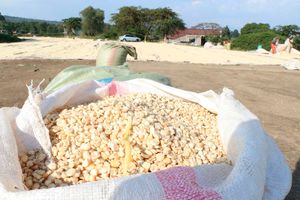
Farmers dry maize in Elburgon town, Nakuru County.
Photo credit: File | Nation Media Group
AFC Managing Director Mr George Kubai acknowledged that the funding gap continues to affect the corporation’s ability to meet farmers’ needs.
“The demand for loans outstrips the available funds, but we are working with development partners on how to meet farmers’ financial needs,” he said.
Mr Kubai said AFC remains attractive because it offers lower interest rates compared with commercial lenders.
“The corporation offers credit at the lowest interest rate of 10 per cent per annum, attracting many applicants unlike commercial financial institutions that have stringent conditions and higher interest rates,” he said.
The government has rolled out emergency measures aimed at cushioning farmers and preventing a looming food shortage following the expected decline in maize production.
Among the interventions is a programme to convert damaged and immature maize into animal feed, allowing farmers to recover part of their investment instead of losing the entire crop.
The government also plans to strengthen post-harvest management by ensuring available maize is properly dried and stored to reduce losses.
Farmers are also expected to receive support ahead of the October-December rains through subsidised seeds, fertiliser, land preparation and other inputs to enable them plant again and recover from the current losses.
“The government is aware of what has happened to this season’s crop and what is projected later in the year. We are taking every possible measure to ensure no Kenyan goes hungry and that farmers are supported to recover from losses caused by prevailing weather conditions,” said Deputy President Prof Kithure Kindiki after chairing a crisis meeting on food security.
The Ministry of Agriculture has deployed experts to assess maize production in the North Rift, Kenya’s main grain-producing region, to determine the likely harvest and guide food security interventions.
“The assessment aims to evaluate the 2026 long rains maize crop, estimate expected production and generate information on food security,” the Ministry said in a statement circulated to farmers in maize-growing areas.
The country’s maize harvest is projected to decline by 30 per cent this season due to prolonged dry weather, inadequate top-dressing fertiliser and the resurgence of fall armyworm.