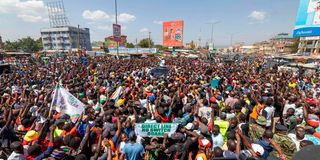
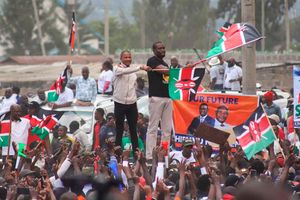
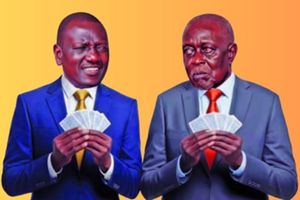
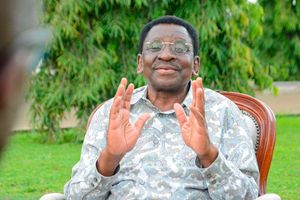
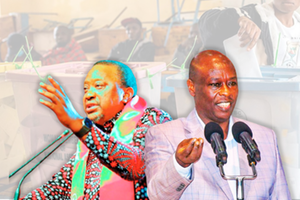
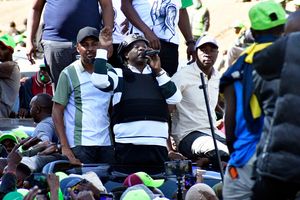
As the race to the 2027 General Election gathers momentum,two of Kenya’s most politically consequential regions, Luo Nyanza and Mt Kenya, are undergoing a political reset that is reshaping alliances and redefining the country’s electoral map.
Long regarded as predictable voting blocs with clear political anchors, the two regions now find themselves in uncharted territory.
The absence of long-standing kingpins, shifting loyalties and aggressive incursions by rival camps have turned both into battlegrounds that could ultimately determine the outcome of the next presidential contest.
The unfolding realignment has triggered intense political jostling with both internal factions and external players scrambling for dominance in regions that collectively command millions of votes.
For decades, Luo Nyanza stood as the bedrock of opposition politics under the towering influence of former Prime Minister Raila Odinga and the ideology commonly referred to as Odingaism.
But following his death in October 2025, the region has been thrust into political flux, opening the door to new contenders eager to inherit or dismantle his legacy.
Already, President William Ruto’s United Democratic Alliance (UDA) has made notable inroads culminating in grassroots elections held in Siaya, Kisumu and Migori counties. The moves signal a calculated attempt to chip away at a region that overwhelmingly rejected him in the 2022 election.
At the same time, the once formidable Orange Democratic Movement (ODM) is grappling with internal divisions that have fractured its traditional support base. Two rival factions Linda Ground led by party leader Dr Oburu Oginga and Linda Mwananchi, spearheaded by Secretary General Edwin Sifuna and Siaya Governor James Orengo are locked in a supremacy battle that has further complicated the region’s political direction. Orengo and Sifuna have planned to take Linda Mwanachi campaigns to Kisumu on Sunday.
Key figures including Dr Oginga, Orengo, Governor Gladys Wanga (Homa Bay) and Cabinet Secretaries Opiyo Wandayi (Energy) and John Mbadi (Treasury) are all angling for influence in the post-Raila era, each positioning themselves within the evolving power matrix.
Beyond the region, political heavyweights are also circling.
President Ruto is leveraging the broad-based government arrangement to penetrate Nyanza, while Wiper Patriotic Front leader Kalonzo Musyoka is banking on past political loyalty, hoping the region will reciprocate his consistent support for Mr Odinga in previous elections.
Interestingly, the Oburu-led Linda Ground faction has signalled support for President Ruto while the Linda Mwananchi group has aligned itself with the United Opposition highlighting the deepening fault lines within ODM.
ODM Party leader Dr Oburu Oginga (left), President William Ruto and ODM Chairperson Gladys Wanga share a cake during ODM@20 celebrations at Sarova Whitesands in Mombasa on November 16, 2025
Governor Orengo views UDA’s incursion as part of a deliberate re-election strategy by President Ruto, drawing parallels with the approach used to gain ground in Mt Kenya.
“Dr Ruto has used the political playbook that he used in Central, where his partnership with former president Uhuru became his pathway to the region. Right now, whether ODM likes it or not, they have opened doors for UDA in Nyanza.He has made inroads in Nyanza that ODM leaders now feel unsafe. The political direction and structure that exists in Nyanza may be destroyed, and later rebellion like it is now happening in Mt Kenya,” says Mr Orengo.
In 2022, the four counties of Kisumu, Migori, Siaya and Homa Bay cumulatively had 2.2 million votes. A projection by the Independent Electoral and Boundaries Commission (IEBC) show that the four counties would in 2027 polls have 2.78 million votes.
The region has for successive elections joined hands with Western, Gusii and Coast, making a crucial voting bloc. Analysts believe the voting pattern by the traditional ODM zone may not change much despite Mr Odinga’s absence in the 2027 polls.
However, he says the overtures are likely to fail as a result of rebellion by those who identify with Mr Odinga’s legacy of fighting for social justice as well as the push back by the Linda Mwananchi camp.
“The UDA axis may want to entice the region, but I don’t think the offer may inspire the region to go that way in a significant manner,” said Mr Orengo, adding, “I don’t see any concrete agreement between UDA and ODM that may see the region take that route.”
Equally, Mt Kenya is also sailing politically unchartered waters. Unlike in the past elections when it had a kingpin, central Kenya appears to be up for grabs, with Dr Ruto, former President Uhuru Kenyatta and former Deputy President Rigathi Gachagua battling for control.
Emergence of youthful politicians like Kiharu MP Ndindi Nyoro, who have opted to pursue their distinct political paths, have also complicated the political dynamics for a region that for the first time, does not have a clear dominant party.
It is no secret that the region that swept Dr Ruto to power in 2022 by handing him close to three million votes has been drifting away from the Kenya Kwanza administration following the impeachment and subsequent removal from office as deputy president of Mr Gachagua in October 2024.
There are also sentiments of alleged unfulfilled promises and tax policies that have run down businesses. But the President and his allies, including Deputy President Kithure Kindiki, have continued to woo the region and project an image that all is not lost ahead of the next polls.
Deputy President Kithure Kindiki (top) and his predecessor Rigathi Gachagua (bottom) address campaign rallies in Mbeere North ahead of November 27 by-election.
Laikipia, Tharaka-Nithi, Murang’a, Kiambu, Nyeri, Kirinyaga, Nyandarua, Embu, Meru and Nakuru collectively gave Dr Ruto nearly three million votes. In the 2022 polls, the 10 counties had a cumulative vote power of 5.8 million. IEBC’s projection shows that the 10 counties would have 7.4 million votes.
Former Cabinet Secretary Moses Kuria notes that the IEBC projections across the 47 counties look good for Dr Ruto’s re-election bid.
“The numbers are not looking good. From a voter registration perspective, I have the figures because IEBC is issuing them every week and I’ve been tracking them closely. Mt Kenya region — I’m talking about nine to ten counties — is underperforming compared to the rest of the country by about 20 per cent based on expectations,” says Mr Kuria.
He also talks of a possible voter apathy in the region since it is likely not to have a candidate in the race. In his estimation, even if Mt Kenya votes against Dr Ruto to a man, the perceived broad-based counties will hand him victory by an estimated one million votes.
Suba South MP Caroli Omondi, however, argues that a presidential ticket of leaders who have traditionally supported Raila in previous elections will attract majority support of the Luo nation. He says the ticket will also be attractive to the Gikuyu nation and Gen Zs.
“The 2027 general elections may well mark the first time since 1992 that there will be no Luo or Kikuyu of consequence on the presidential ballot, not even as a running mate.For the Luo nation, they will have to decide whether or not to reciprocate the support extended to them by other communities in the previous elections,” said Mr Omondi. Since the reintroduction of multiparty politics in 1992, the two regions have fielded presidential candidates in six of the seven elections, with the exception of 2002 when Raila joined other opposition leaders to rally behind Mwai Kibaki, who beat then President Moi’s preferred successor, Uhuru Kenyatta.
Kenyatta, however, beat Raila in the two subsequent elections in 2013 and 2017, but the outgoing President Kenyatta was unsuccessful in his quest to have the ODM leader succeed him in 2022. Raila lost to President Kenyatta’s then deputy, William Ruto.
“For the Kikuyu nation, they will have to decide whether or not to stand with the other Kenyans who believe that it is time for change in Kenya. I believe that they will walk with other Kenyans. Their support will irreversibly tilt the presidential election,” says the MP, who is part of the Linda Mwananchi camp.
EALA MP Kanini Kega, who is an ally of Mr Gachagua, says that the region has to rally behind the former DP and his DCP party. He argues that it was because of lack of a strong regional party that Mr Gachagua was impeached.
“Mt Kenya is united, and once they make a decision it is difficult to change them. Right now they still don’t know who they will vote, but they know who they will not vote,” says Mr Kega.
He dismisses narrative that the region may witness voter apathy for not having a presidential candidate.
“I can assure you, regardless of the candidate, Mt Kenya will come out in their numbers and vote out William.”
He says the region’s focus now is to ensure it builds a strong political party and ensure it sweeps the region for purposes of having strength in Parliament.
“Mt Kenya people will never go to an election without their own political parties. If Gachagua had a party, Gachagua would not have been impeached. The only opportunity we have as a region is to rally behind DCP and Mr Gachagua. The issue of having many parties is neither here or there, but I can assure you that a majority of our MPs will be elected on DCP,” says the EALA MP.
Jubilee Deputy Party Leader Jeremiah Kioni says those running for the top seat have to convince the region through their tract record. He says the region is not ready to vote in another administration that will turn against it, like Kenya Kwanza.
While rooting for Dr Fred Matiangi’s candidature, Mr Kioni says the region is cautious to avoid putting someone in office only to start singing one term once they are in office.
“Those running for president must come to Mt Kenya and convince the region. What assurance do we have that the next administration will not against the region like in the case now,” says Mr Kioni.
“If you are able to demonstrate your ability to perform so that the entire country can benefit as opposed to this idea of shares. DCP has come and organized politics around regional blocs, which is unfortunate,” he said while questioning the United Opposition for delaying to come up with a proper framework of going into the 2027 polls.
“United Opposition has become a platform of selling one term without any proper arrangement of what next,” says Mr Kioni.
Former President and Jubilee Party leader Uhuru Kenyatta (left) with party Secretary-General Jeremiah Kioni during Special National Delegates Conference at Ngong Racecourse in Nairobi on September 26, 2025.
Photo credit: Bonface Bogita | Nation
“You cannot rule out periphery parties sponsored by Ruto to come in with an aim to divide the votes. Do not even be surprised to see other presidential candidates emerging with the same intention from the Mountain,” says Mr Muriu.
He notes that the United Opposition is aware and prepared to deal with all the political machinations, saying “We shall lead a campaign to label them as Dr Ruto appendage parties and candidates, or rather pink, blue and orange wheelbarrows.”
Political analyst Prof Masibo Lumala of Moi University says Dr Ruto’s determination to hold onto Mt Kenya is anchored in the region’s electoral weight and its role in sustaining a national coalition.
Despite the hostility, Prof Lumala observes that Dr Ruto does not require total dominance, but just a significant share of the vote to remain competitive nationally beyond his Rift Valley base.
He says that Dr Ruto has an opportunity to exploit incumbency to counter the hostility by ensuring no single political leader monopolise the region politically.
He cites the position of Prof Kindiki as a major factor on how the region would respond to the overtures by Dr Ruto.
President Ruto, he says, is likely to appeal to more moderate, technocratic, and less confrontational segments of Mt Kenya should he retain his deputy. He argues that retaining Prof Kindiki has a potential of softening resistance without necessarily winning back hardline Gachagua loyalists.
Prof David Monda, a US based university lecturer and political analysts holds similar views, while highlighting the region’s numerical strength. He argues that the region commands nearly 35 per cent of the national tally.
“So he's really hedging his bet. Trying to balance any losses from ODM strongholds with at least marginal gains in the Mountain. So at least getting some of the Mountain vote rather than lose it all,” explains Prof Monda.
The President’s decision to continue wooing the region, he argues, is also a message to ODM that he cannot be held hostage to their political demands.
Success of his political schemes, Prof Monda argues, will depend on political dynamics closer to the 2027 election.
“Politicians are rational actors, looking to maximize gain and lower risk in pursuit of material interests - in this case chasing power. So, Gachagua/Mountain will be weighing where to throw their weight depending on if the opposition or UDA appears more likely to win.”