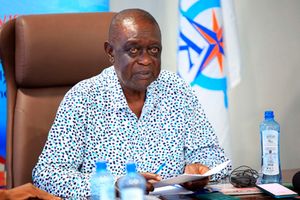
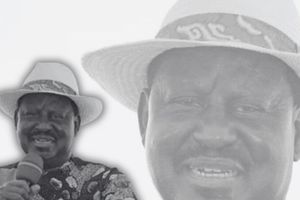
The Kenya Revenue Authority (KRA) Chairman Ndiritu Muriithi has announced the board's decision not to renew Commissioner -General Humphrey Wattanga’s contract.
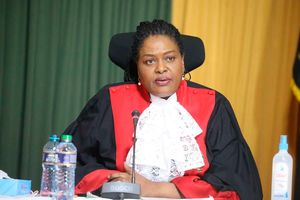
Following this decision, it is reported that President William Ruto has nominated him to serve as Kenya's High Commissioner to South Africa. Meanwhile, the Commissioner of Customs and Border Control, Dr Lilian Nyawanda, has been elevated to serve as the Commissioner -General on an acting capacity.
In announcing the changes, the chairman did not divulge the reasons for the board's decision to send Wattanga packing. Those in the know, however, intimate that he was unable to smoothly settle into the job, often displaying lack of confidence, and indecision.
The Kenya Revenue Authority Act (Cap 469) provides for a Commissioner- General's three-year term, renewable once, subject to satisfactory performance. The outgoing Commissioner- General’s first term started in 2023. A second term would have ended in 2029.
That Wattanga's contract will not be renewed is not unusual at KRA, given the quick turnovers that have, so far, seen eight substantive Commissioner- Generals come and go since the revenue agency's inception in July 1995.
Out of these, only two — Michael G Waweru and John K Njiraini — have served two full terms. In fact, Waweru served three terms from 2003 to 2012. For his part, Njiraini, who succeeded Waweru, served for seven years from 2012 to 2019. The founding Commissioner-General, Edgar Ivan Manasseh — who is credited with mooting the idea of creating a semi-autonomous revenue agency in Kenya — and establishing the structures on which KRA stands to-date, served for only one year (1995-1996), creating room for Yusuf Abdirahman Nzibo, who did a two-year stint from 1996 to 1998.
The first Commissioner -General to complete a full three-year term was John Msafari whose tenure ran from 1998 to 2001, giving way to stockbroker, John Paul Munge, who was bundled out of office in 2003 following the collapse of Eurobank, which he was associated with.
Wattanga's predecessor was Githii Mburu who served from July 2019 to February 2023. Following Mburu's sacking, Rispah Simiyu took over in acting capacity upto August 2023 before Wattanga was ushered in. Of all these Commissioner -Generals, only Edgar Ivan Manasseh had technical tax administration background. All the rest were outsiders who were either appointed to the position directly from the private sector, or after a stint in revenue administration.
Those who were appointed directly include; Yusuf Nzibo, John Msafari, John Munge, Michael Waweru and Humphrey Wattanga. Those who had benefitted from high-level appointments prior to their elevelation to the Commissioner -General’s position were John Njirani who served as Commissioner for Large Taxpayers Office (LTO) for about six years; Githii Mburu who worked briefly as a manager in LTO and Commissioner for Intelligence and Strategic Opetations; and Rispah Simiyu who worked briefly as Deputy Commissioner for Alternative Dispute Resolution, and later Commissioner for Domestic Taxes.
None of these officials had any formal technical training in tax administration. All of them were professional accountants. The Institute of Certified Public Accountants of Kenya has always pushed the government to appoint accountants to head KRA, creating a perception that accountancy is synonymous with tax administration.
Strictly speaking, these are very different disciplines. Given that taxation is multidisciplinary, aspects of accountancy, just like economics, law, sociology, psychology, statistics, mathematics and political science are relevant to tax administration processes.
While accountancy is concerned with recording of financial transactions based on principles, conventions and standards, tax administration, on the other hand, refers to the processes by which a government uses relevant statutes to undertake assessment, collection and accounting for taxes.
Taxation is not an exact science. Good laws and enforcement alone without paying close attention to taxpayers' mindset and needs cannot deliver the requisite taxes. To be effective, tax administration needs to address the compliance continuum, which comprises taxpayer registration, filing, declaration and payment.
These are behavioural, not accounting processes. Besides, tax administration flows directly from fiscal policy, which is the use of a country's taxation measures and expenditure to influence the economy. Over-fixation with accountants as Commissioner -Generals has damaged Kenya's tax administration in several ways.
First, accountants have tended to entrench financial accounting principles and approaches in tax administration processes. Tax administration is a behavioural science that relies heavily on goodwill.
That is why tax statutes allow discretion in favour of taxpayers. Strict financial accounting and audit regimes tend to kill businesses and strain relations between taxpayers and tax administrations. It is difficult for someone without a knack for revenue administration to appreciate this nexus.
Second, successive accountants at the helm of KRA have had a misconception that tax administration is a branch of accountancy. For that reason, several accountants have been hired from audit firms, and deployed in critical tax administration functions, including tax policy. The consequences have been disastrous.
Tax administration is not all about scouring through books of accounts to achieve revenue targets. It is much broader than that, and includes creating a stable and predictable investment environment, fostering economic activity to expand a country's Gross Domestic Product (GDP), creating a safe society, facilitating trade, and promoting shared prosperity, among other functions.
In many jurisdictions around the world, including Singapore, Malaysia, Australia, Mauritius, and others, tax administration has been elevated to a significant profession in the ranks of law, accountancy, auditing, actuarial science, architecture, engineering, medicine among other notable professions.
In Kenya, however, tax administration training has been watered down over the last 10 years. The Kenya School of Revenue Administration, KRA's training institute, has over the last decade been converted into a revenue generating outfit, attracting fee-paying students from outside the revenue agency.
The programmes at the school have become largely academic, exposing KRA to structural ineffectiveness as tax auditors have a field-day, easily manipulating the ill-trained revenue officers to reduce equitable taxes.
While it is important to sensitise citizens on basic taxation knowledge, technical training on tax administration should be reserved for revenue officials. Another mis-step that has characterised Kenya's tax administration over the last two decades is appointment of some individuals lacking in revenue administration training to lead revenue departments as commissioners.
Essentially, commissioners are supposed to be the technical advisers to the Commissioner-General on revenue matters. According to the statutes, the term "Commissioner" refers to Commissioner-General, which means that the buck stops with the latter on technical decisions. If the commissioners and the Commissioner-General are not trained on revenue matters, then one can only imagine the kind of technical decisions that KRA makes.
To make it worse, many of the Deputy Commissioners were drawn from non-revenue departments or appointed directly from the private sector, and are therefore, equally untrained on tax administration matters.
The outgoing Commissioner-General has been operating in a very precarious situation where he was expected to make technical decisions in an extremely unfamiliar environment. With his background in chemistry, he was clearly a square peg in a round hole at KRA.
No wonder, he looked so reserved, often declining invites for television appearances to address the nation on the state of tax administration. Parliamentarians have equally complained about his habitual non-appearances at critical committee meetings, denying him the much-needed political goodwill.
Professor Ongore is a Public Finance and Corporate Governance Scholar based at the Technical University of Kenya. He previously served as a Chief Manager (Deputy Commisdioner) at KRA. [email protected]