Kagio is a vibrant town in Kirinyaga County, strategically located on the slopes of Mount Kenya.
Its favourable climate and fertile soils make the area ideal for agricultural production, particularly dairy farming, horticulture, and coffee, and it is therefore a rich hub for agribusiness.
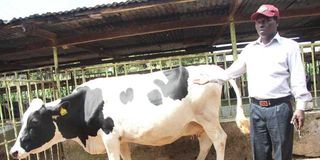
Here, we meet Gerald Mungai, a school manager at Multiple Academy, who is inspecting the lush, evergreen school farm.
The nine-acre farm uses mixed farming to integrate crop production and livestock rearing, ensuring a year-round supply of food crops and animal products.
The farm operates as a closed-loop system, maximising resource efficiency. Crop residues are used as livestock feed, and animal manure is returned to the fields to improve soil fertility and crop production.
As well as reducing the cost of feeding students, the farm serves as a practical learning centre where students actively participate in feeding the livestock and weeding the crops, while learning about modern farm management practices as part of their agricultural studies.
Gerald Mungai, a school manager at Multiple Academy Kagio in Kirinyaga County. This photo, taken on 28 May 2026, shows him working on the school's maize and napier grass farm.
Photo credit: Richard Maosi | Nation
The farm also grows maize for producing animal feed. Other fodder crops include lucerne, sweet potatoes and the highly nutritious Brachiaria grass, which support the nutrition of the livestock.
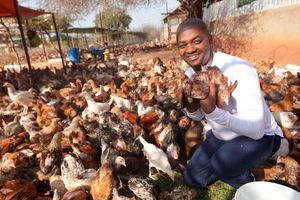
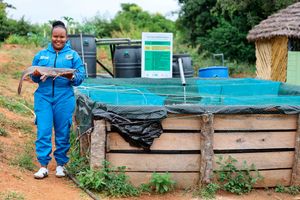
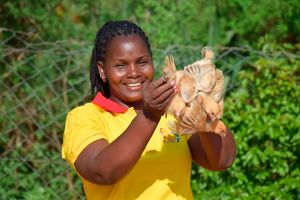
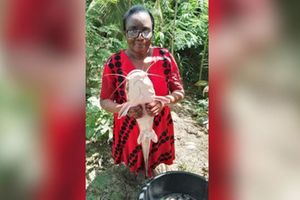
To diversify food sources, the farm also has a fish pond, plantain bananas and a poultry unit with both indigenous and improved cross-breed chickens, as well as a piggery.
"These integrated farming enterprises provide food, enhance practical agricultural learning, and contribute to the school's self-sustainability," says Mungai.
According to Mungai, the dairy unit produces more than 200 litres of milk every day, enough to meet the daily requirements of the school's 1,400-plus students.
He says that maintaining high hygiene standards is critical to preventing disease and improving productivity.
As a result, animal pens and pigsties are cleaned twice daily, while the housing facilities and animals are routinely sprayed to maintain proper hygiene and control disease.
The feed ration for lactating dairy cows consists of ten ingredients: maize meal, maize germ, wheat bran, canola meal, soya meal, lime, salt, a toxin binder, bicarbonate of soda and a dairy premix.
For dry cows and other non-lactating animals, canola and soya meal are replaced with cottonseed and sunflower cake, and maize meal is omitted as these animals require less energy and protein.
"To control pests and diseases, spraying is carried out twice a month, while calves and weaners are dewormed monthly," he says.
Gerald Mungai, a school manager at Multiple Academy Kagio in Kirinyaga County.
Photo credit: Richard Maosi | Nation
He notes that the rest of the herd has developed considerable resistance to worms, as most animals are zero-grazed and not exposed to contaminated grazing fields or fodder sourced from outside the farm.
Comprehensive farm records are maintained, including birth and conception dates, treatment history, milk production, and other livestock and crop records.
'These records help us to monitor animal health, productivity, and the farm's overall performance,' says Mungai.
This significantly reduces expenditure on purchasing food and animal feed, enabling students to enjoy fresh, nutritious meals produced on the premises.
However, Mungai says that prolonged drought, crop failure and outbreaks of livestock disease remain major challenges. During such periods, the school is forced to spend more money on purchasing food, feed and other farm supplies.
He says that many schools continue to struggle with the rising costs of food, utilities, and learning resources. Adopting mixed farming can help institutions to become more self-reliant, while also providing learners with practical agricultural skills.
Mixed farming combines crop production with livestock enterprises such as dairy farming, poultry farming, goat farming, rabbit farming, fish farming and beekeeping. Crops can be used to provide food for learners and fodder for livestock, and animal manure can be used to improve soil fertility and reduce dependence on chemical fertilisers.
Schools can also establish orchards, vegetable gardens and fodder plots to improve nutrition, generate income and promote environmental conservation.
Surplus produce, such as milk, eggs, vegetables, fruit and honey, can be sold to support school operations and reduce reliance on school fees.
As well as improving food security, this kind of farming equips learners with practical agricultural, entrepreneurial and environmental stewardship skills, preparing them for future careers while promoting sustainable livelihoods.