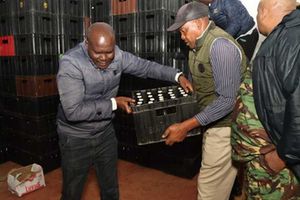
You will not access your favourite alcoholic drink in a supermarket and many public places if Parliament passes a new Bill that also seeks to raise the drinking age from the current 18 to 21 years.
The Alcoholic Drinks and Drugs Control Laws (Amendment) Bill 2026, which seeks to amend the Alcoholic Drinks Control Act (Cap 121), sets tough conditions to manufacturers, sellers and consumers of alcoholic drinks.
The government Bill, sponsored by Majority Leader in the National Assembly Kimani Ichung’wah, is the latest in a series of moves to confront the illicit alcohol and drinking problem across the country.
In July 2025, the National Authority for the Campaign Against Alcohol and Drug Abuse (Nacada) unveiled its 2025 National Policy on Alcohol, Drugs and Substance Abuse, which had proposals such as ban on online sale of alcohol and establishment of alcohol free zones around schools and churches. The wide-ranging proposals on the sale and consumption of alcohol and drugs attracted strong reactions. After the backlash, Nacada clarified that the policy was a roadmap and were not yet being enforced.
The new Bill by the Majority Leader bans the sale of a person who is armed with any offensive weapon, concentration of points of sale of alcohol in an area, bans online advertisement of alcohol and sale of any alcoholic drink 300 metres from any learning institution.
If the move on sale of alcohol near schools is fully implemented should the Bill ibe passed, it is likely to lead to the closure of thousands of bars while others could be forced to relocate.
“A person who is licensed to sell alcoholic drinks under this Act shall not allow a person who is under the age of 21 years, whether alone or accompanied to access or enter the premises where the licensee sells alcoholic drinks,” reads Clause 35B of the Bill.
Raising the legal drinking age to 21 years would align Kenya with countries such as the United States where studies have shown that delaying access reduces drinking and related harms among youth.
According to the Bill, premises where alcohol will be sold will be located 300 metres away from any nursery, primary, secondary or other learning institutions for the persons under the age of 21 years
The government Bill, which seeks to amend the Alcoholic Drinks Control Act (Cap 121), is the latest in a series of moves to confront the illicit alcohol and drinking problem across the country.
Photo credit: Pool
Clause 12 (2) of the Bill stipulates that the County Alcoholic Drinks Licensing Committee shall not grant permission for the sale of alcoholic drinks in public beach, cinema hall, medical facility, park, sports facility, bus stop and petrol stations.
The sale of alcohol will also not be permitted in railway stations, pier public transport including in a train, bus, aeroplane, ferry or boat.
Supermarkets, retail stores selling products associated with children, residential areas, restaurants, education institutions, university, college or any other institution of higher learning will also not be granted license to sell alcohol.
The Bill also bans online sale of alcohol, through courier, hawking, and home delivery or through a vending machine.
The areas have three months upon passage of the Bill and assent by the President to wind up their stock.
“A person who upon coming into force of this section holds a valid license for the sale of alcoholic drinks in the specified areas or manner specified shall purposes of disposing of the alcohol drinks continue to carry on business for a period not exceeding three months from the commencement of this section or upon the expiry of the license, whichever comes first,” reads Clause 12 (3) of the Bill.
Public officers either in national or county government who will be involved in the enforcement of the act once it comes into force will not be permitted to own or operate an outlet selling alcoholic drinks directly or through proxy.
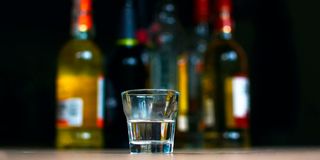
A collection of alcoholic beverages.
Photo credit: Shutterstock
The Bill also blocks landlords from leasing their premises for manufacturing, storing or selling alcohol if the premises is in a residential area or within a prohibited distance from any learning institution.
“A landlord shall not lease out or maintain a lase or license for any premises used for manufacturing, storing, selling or distributing alcoholic drinks,” reads the Bill.
The draft law stipulates that premises where alcohol will be sold will have to be clean and have adequate sanitary arrangements.
There will be no concentration of bars or liquor stores in particular areas as the Bill stipulates that in granting permission to sale of alcohol in particular locality, the committee will check already issued licenses and determine whether any other bar is needed in the same area depending on the population density per square kilometre.
If enacted, manufacturers and importers of alcoholic drinks are also staring at a new levy fund that will be imposed on every litre of alcohol that they will import or manufacture.
The Bill introduces solatium compensatory levy imposed on manufacturers and importers of alcoholic drinks.
The levy shall be charged at the rate of Sh2 per litre of any alcoholic drink that is manufactured or imported by those licensed in that financial year.
“The levy shall be payable to the collector for remittance into the Fund not later than the tenth day of the month following the month during which the levy is due,” reads the Bill.
The money collected from the fund shall be used to support the National Authority for the Campaign against Alcohol and Drug Abuse (Nacada), National Alcoholic Drinks Control Committee and civil societies helping in the fight against drug abuse in the country.
According to the Bill, an amount of not less than 50 per cent of the annual income of the income of the fund shall be used to finance the operations of the National Alcoholic Drinks Control Committee and an additional amount of not less than 15 percent shall be used to fund civil society programmes relating to the prevention and management of alcohol and drug abuse.
New Bill that also seeks to raise the drinking age from the current 18 to 21 years.
Photo credit: Shutterstock
For advertisement of any alcoholic drink, the Bill proposes establishment of a Regulation Committee that will be tasked with vetting and approving any advertisement or promotion in print, electronic, online and any other media relating to alcoholic drinks.
“A person who intends to advertise or promote any alcoholic drinks shall seek the approval of the Regulation Committee and apply for an occasional license before undertaking such advertisement or promotion,” reads the Bill.
The stringent introduction of advertising is informed by a Nacada report which showed that one in every four teenagers first tried alcohol after seeing a celebrity endorsement or alcohol advertisements online or on billboards.
According to the Status of Drugs and Substance Use among University Students in Kenya released by Nacada in February last year, 87.3 per cent of students consume alcohol, followed by cigarettes at 64.4 per cent, and shisha at 41.2 per cent.
The study surveyed 15,678 undergraduate students from both public and private universities.
It also showed that 66.4 per cent of respondents said they get drugs or substances from their friends, while 59.3 per cent said they source them from neighbourhood canteens and bars.
The studies revealed that alcohol continues to be the most commonly used substance among university students.
The Bill restricts transportation of alcoholic drinks between 6am and 6pm while any motor vehicle distributing alcoholic drinks for commercial purposes shall be branded with colours as will be prescribed.
Those violating the provision will be fined Sh10 million or imprisonment for a term not exceeding five years or both.
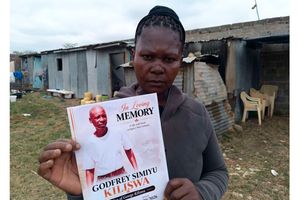
The country has been battling consumption of illicit brews with some turning out to be deadly while others have left many Kenyans blind and with long term illnesses.
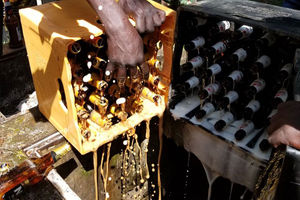
The recent crackdown by various government entities have led to the shutdown of thousands of bars while those that have been operating unlicensed outlets were arrested but later released by courts.
However, despite the massive crackdown by the government, poor enforcement, corruption, weak oversight and poor coordination by the government agencies have led to the efforts bearing little fruits.
Speaking on October 7, after meeting the Multi-Sectoral team involved in the fight against illicit brew at his Karen residence, Deputy President Kithure Kindiki said alcohol and drug abuse is affecting the ability of Kenyans to participate productively in the economy while placing additional pressure on public health systems.
“It is also affecting the productivity in our economy. It is affecting public health,” he said.
The Deputy President said that Kenya’s future development will partly depend on how effectively authorities deal with illicit alcohol and drugs.
“And therefore, the future of the nation is very closely linked with the efforts that we make to stem this issue,” Kindiki said.
Following its introduction for first reading, the Bill will now undergo public participation in line with Article 118 of the Constitution before it’s debated by the House.